Showing posts with label budget tricks. Show all posts

Sunday, March 30, 2014

Cheap Floral Wreaths

Fake flowers are expensive. Often not as expensive as real flowers, but still not cheap.

*Side note: I learned a while back that not everyone knows the dollar store sells fake floral. It might need some extra glue because the flowers like to fall off their stems, and you'll likely want to fill out your arrangement with some higher quality fake flowers, but for bulk fake floral, the price can't be beat.

I was lucky when working on The Suicide at Roosevelt University, that there was already a stock of flowers and greenery to pull from, but I still needed six wreaths to create my arrangements. The foam wreath forms at the craft store were small and expensive. But these basic wire boxwood wreath forms were cheap and just the right size.
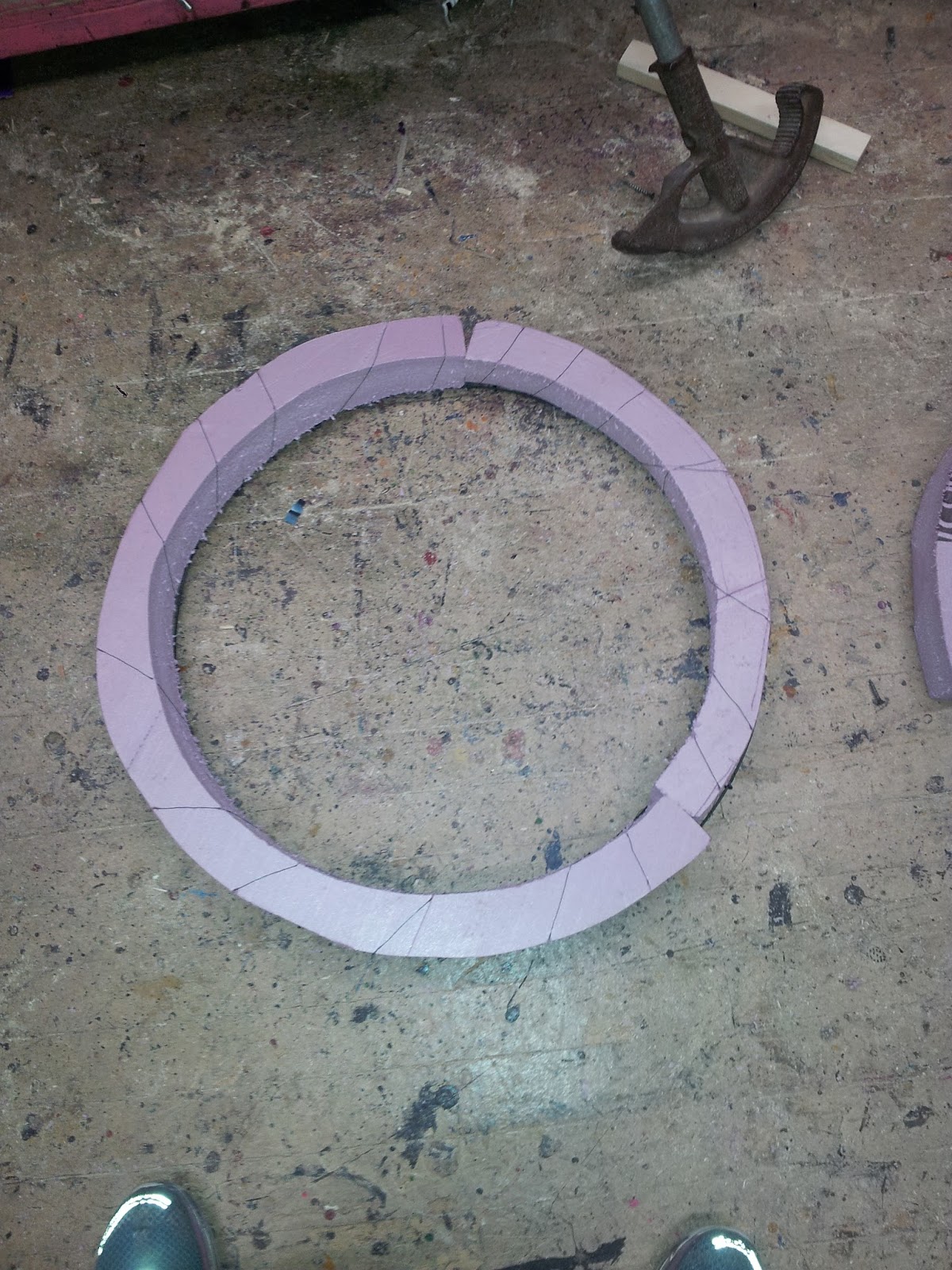
I traced the wire form onto some 1.5" scraps of pink foam, and cut out the foam pieces with a jigsaw. 

 Then I used floral wire to wire the foam onto the form. You can see in this photo that my pieces of foam didn't always fit exactly, but under all the layers and flowers, small inconsistencies like this disappeared.
 and here is a view of the same wiring from the back side. 
 Some of the wreath forms I left pink, and just started adding flowers. On others, like this one, I wrapped the wreath in colored tissue paper and tulle first. The Tissue paper and tulle was thin enough that the wire stems of the flowers could poke right through, and into the foam without much effort. 
 The floral arranging itself was mostly just about finding enough flowers in the right color family to fill the space. 
And here are some of the finished wreaths (we ended up making four and pulling 2 from stock). 


Sunday, September 15, 2013

Slice-able Cheese and Sausage

For Miracle on South Division Street, the characters were supposed to be preparing a small lunch of pepperoni and cheese, and fruit salad. The actors ended up eating parts of the fruit salad, which I will explain in another post, but the cheese and sausage just needed to be sliced up and look real.

To achieve this effect, without the giant cost of providing a new block of  cheese and a new pepperoni nightly, we used clay
. I purchased nice, plastalina modeling clay from Blick for the project. Plastilina brand plasticine is advertised as never drying out. I wanted to make sure that our clay was in no danger of drying out or getting crusty during a 40 performance run.
  I took two colors of yellow and two colors of brown.
I ripped the clay into small pieces and then pressed the pieces back together to get a mottled more natural color/texture
Of course, the packaging is what sells so many pieces of fake food.
We wrapped the clay in plastic wrap, and secured it with sticker labels that we printed to be used nightly. We had enough labels to use one per performance, so the actor did not have to worry about ripping them, and the stickers were able to hide and secure the loose ends of the plastic wrap, making the wrap look much more professional.


On stage, the actors were able to unwrap both pieces easily, place them on their respective trays, and slice into them with standard kitchen knives. 


After the show each night, the run crew can just press the clay back together and smooth out the seams before adding more plastic wrap and another sticker. 


Tuesday, July 23, 2013

Golden Chairs

Let me start by saying that for Amadeus, at Oak Park Festival Theatre, we had just about zero budget. I had to be incredibly selective in how I spent my money because the script calls for many props very specifically. 
I was especially worried about furniture, after seeing nothing that could immediately pass for Rococo chairs in the limited stock, some plastic garden chairs caught my eye. 
 
There is no garden scene in the show, but I wondered if there would be a way to add an upholstered seat in order to make them feel like indoor dining chairs.
I found three chairs in total, two that looked like the green one above, and one that looked like this white one. After a coat of gold paint, they looked just flowery and over-the-top enough to pass as authentically Rococo. 
 By using a fender washer to hold a screw through one of the holes in the plastic seat, into a plywood circle I cut, I was able to attach upholstered seat cushions without damaging the chairs. 
 I think they turned out well, and they worked perfectly for the moment when Salieri talks about how he was able to buy lavish new furniture for his apartments. 

Monday, May 6, 2013

Never Be Afraid to Ask...Coke Cooler

For The Lake Effect at Silk Road Rising, the set designer wanted a standing Coke cooler in the corner of our set (a small family-owned Indian restaurant).
I was a bit worried about the idea, because our budget was fairly limited and I knew that purchasing one would be cost prohibitive. Also, a quick search on ebay and craigslist turned up only antique or vintage models.
Pretty quickly I realized that the only way we were going to get what we needed would be to go straight to the source. I called Coca-Cola.
I happened to have learned many years ago, when my grandfather was closing his old family pharmacy, that the big drink coolers found in restaurants and convenience stores do not belong to the stores themselves, but to the drink companies. Pepsi, Coke and other brands set up an account with the store owners, provide the coolers and then deliver the stock to fill it.
I found a service number on the Coca-Cola website, called and explained to the person who answered what I needed. I was sent to three or four different people, explaining our needs to each representative and then being forwarded on to the person who they believed could best help me. Eventually I spoke to Jose, who was able to figure out how to code the delivery for company records and arrange a time to deliver our machine. It arrived on schedule without any problems and immediately made the set look so much more like a real restaurant. All of this has been COMPLETELY FREE!
One of the most important parts of making something like this happen is good phone communication skills. With every person I spoke to I acknowledged that this was of course a strange request, and mentioned over and over again how much the help was appreciated. I stayed open and flexible in terms of what arrangements could work for us. I mentioned that we are a non-for-profit, and offered to provide any documentation that would be needed for tax records (they have not indicated that they needed anything at this point). I also made a point to tell them that the machine, and the logo would be clearly displayed to our audience every night. I had numbers on hand of audience sizes and numbers performances to back up my claim that this would be useful advertising for Coca-Cola.
 A couple side notes. After the rest of the set had been dulled down and dirtied to make it look more real and used, the bright clean colors of the coke cooler were overly distracting. The director asked if I could dull it down in any way. The solution I found to darken the color, without damaging the piece, was to gaff tape a layer of dark brown tulle over the entire side of the machine. The gaff tape should remove without leaving a residue, and the thin creases wrinkles in the fabric blend perfectly into the side of the machine from just a few steps away.

The only other problem we had with putting the machine onstage was the noise. The sound of the refrigerator motor, on our hollow set, in the marble floored theatre was just too much. The machine is rigged so that the lights and the refrigerator are run together on the same plug. 
Our lighting designer was able to solve the problem by installing long LED strips inside the machine and running them independently (this also allowed her to have more control over the lights and run them off the dimmer system). 

Friday, March 15, 2013

To All The Small Theatre Companies

I had a wonderful meeting with a woman the other morning. She is planning to produce her first storefront show here in Chicago, with the hopes of continuing to produce with the same group as a new theatre company. We talked a bit about resources here in Chicago, the way tech tends to be scheduled, things that are typically written into designer contracts, and payment schedules.
She also asked me a very interesting question- What makes me want to work with a company that can't pay me what I'm worth? What can a small company offer to me as an artist, besides money, to make me want to work with them.
I gave her a long list, and I figured, why not share it with anyone else who could use it.
In no particular order:
  • Be up front with me from the first email. "We don't have a lot of money" is what I usually hear, which is honest, but if I don't know exact dollar amounts, it is impossible to have a productive conversation. This is partially because I need to look at my personal budget and see if I can afford to do this show, but more because I need to know if it is possible to do the show, at the level of quality I hold myself to, for the amount in the budget. 
  • On a similar point, it is really helpful to have a conversation with the director about what is possible and what is not possible for me to do on this show with this budget. If the director and I start out on the same page, the budget can be any size, but if the director has aspirations bigger than her budget, it doesn't matter what size the budget is, we will both end up unhappy with the end product. 
  • Treat the things I provide you with respect. I will not get frustrated if something breaks, especially in rehearsal when you are trying new ideas, that is part of the process. I will get frustrated if pieces are lost, or not stored safely, or if I give you specific instructions for the use or care of something and those instructions are ignored. 
  • Get me involved in the production process as soon as possible. I love working on shows where production meetings start months before the first rehearsal, even if we only have one or two. I love to be in a room full of artists talking about the meaning of the play, what we would like to communicate to the audience, what sort of language we all want to work with in terms of color, and shape and texture that could apply to all design elements? I love conversations about why we are doing this show in this time and this place, who our audience is, how we want them to interact with the characters etc. Productions that start this way always seem to lead to more collaborative production teams, which helps produce work that we can all take pride in. 
  • Continue that type of artistic collaboration throughout. I distinctly remember sitting in a production meeting after a first preview; the lighting designer mentioned that he had been distracted during the performance by the squeaking stool in the stage manager's booth behind him, he figured that she may not have been aware that the sound was carrying. The ASM indignantly turned to the room and asked "Did the lighting designer just give stage management a note?" The room went silent, and after that no designer felt very comfortable giving a suggestion or even asking a question to another department, and an atmosphere like that can only hurt a show. An open conversation between all departments about what is working and what isn't from sound cues to script choices allows everyone in the room to take advantage of the collective knowledge of so many theatre practitioners  Collaborative environments with open conversations make me feel like I am growing as an artist, and that makes me want to come back to work with you. 
  • Feed me. I know it's little and I know it's silly, but something to eat that I don't have to think about goes a long way to making tech more pleasant and making me feel appreciated.  Also if I am running around like that, I often forget to eat, and I get pretty cranky before I realize I'm probably just hungry, this is not a time when I am doing my best work. 
  • Do something about parking if possible. If you can make an arrangement with a local lot, or reimburse me for some of my meter receipts, or even have an ASM ready to run out and grab something from me when I pull up so that I don't have to circle for an hour to find a space close enough that I can carry all the everything from my car, that would be awesome. While many theatres in town are easily accessible by public transportation, that doesn't help me when I have a car full of props (costume designers have this issue too, help them out if you can).
  • I worked with a theatre that did a talkback with each person involved after each show. I met two company members (who had not been directly involved in this production) for coffee and talked for an hour about what went well, what didn't, what I would do differently if I could do it again, and then about what my career goals and aspirations were in general. It was awesome. It made me feel appreciated, respected, and I got some great feedback and career advice.  
  • Get me keys to the space, if you can (if you are renting I know this is much less doable). If I can drop off big pieces at any time of day regardless of who else is around and available it makes my job so much easier. It is hard to keep shopping for furniture if there is a dining table taking up the entire bed of my pickup truck.  
  • Pay attention from the beginning to where the trouble spots are going to be. One of my favorite  theatre companies does this particularly well. Time, labor, and budget resources are directed to the department who will need them most. I know if I am doing a big props show with them I will have a bigger budget, a bigger fee, a few more one-on-one meetings with the director and/or the set designer and I'll have the production manager offering to help me track down big pieces. I see the same support being thrown behind other designers when it is a heavy costume or lights show. If I know I will be taken care of when I need help, I will keep coming back regardless of whether the support was directed to my department this time. 
  • Do interesting shows with a clear mission. The more targeted you are about what you do and what makes you different from everyone else, the more intriguing you are. The more passionate you are about WHY you choose to do what you do, the more likely I will becoming interested and involved in your mission and invested in your success. The rule of thumb I tell people is, that I should be able to give you ten amazing plays that you would love to see, and you should be able to eliminate seven of them immediately because they aren't a good fit for your company. If you can't do that, you need a more focused vision. 
  • Prop Freeze! This is my favorite new thing. The idea is that we set a date during the rehearsal process when the director is supposed to stop adding new props (with a couple of companies this has been first tech). After the freeze date the director can still ask for new things and for changes, and I will do them to the best of my ability, but I also have the ability to tell them without any guilt that there is no longer enough time or money to make that change. With some directors, this would hardly ever come up, but with others, it's really good to know I have a safety net in case they make a last minute outlandish request. 
  • Get me help. I have lots of ways I can use untrained labor. There is always a repetitive project that could use another set of hands, and I love to teach. Even one or two hours on one day can be awesome and make me feel supported.
  • Understand that I will likely leave when I'm done. Especially on smaller shows, if I have completed all of my notes and haven't been getting notes from other people, I'm probably going to stop coming to previews and I may not make it to opening. This is not because I don't like the show or hanging out with you, this is probably because I need to start working on my next show. If you are understanding and respectful of this, I am much more likely to want to work with you again. 
  • Remember, I need to keep working with these vendors. A few years ago, I performed a props miracle and was able to get a high-end furniture store to loan me several expensive modern furniture pieces for a production. At the time I was driving a small car, but the company manager assured me that they had someone with a pickup who would help to return the pieces to the store after strike. I  learned about a year later that they never returned the pieces. I could never bring myself to show my face in that store again (it recently closed).
  • Hire cool people. A lot of this will be contingent on doing some of these other things so that the cool people want to keep coming back. Nothing will make me sign on for a low paying show quicker than a list of people involved that I like working with. 

Wednesday, February 20, 2013

dressing up wedding invites

Early on in wedding planning I told my fiance, "I don't care about paper, please remember that I said that. Please remind me that I said that when I am tempted by all the pretty, customized, unique, beautiful shiny invitations and programs and escort cards that people will be trying to sell me."
(as with pretty much everything wedding, this was my personal decision, and I am in no way judging anyone who put lots of time and money into their wedding invites, I just knew it wasn't a priority for me.)

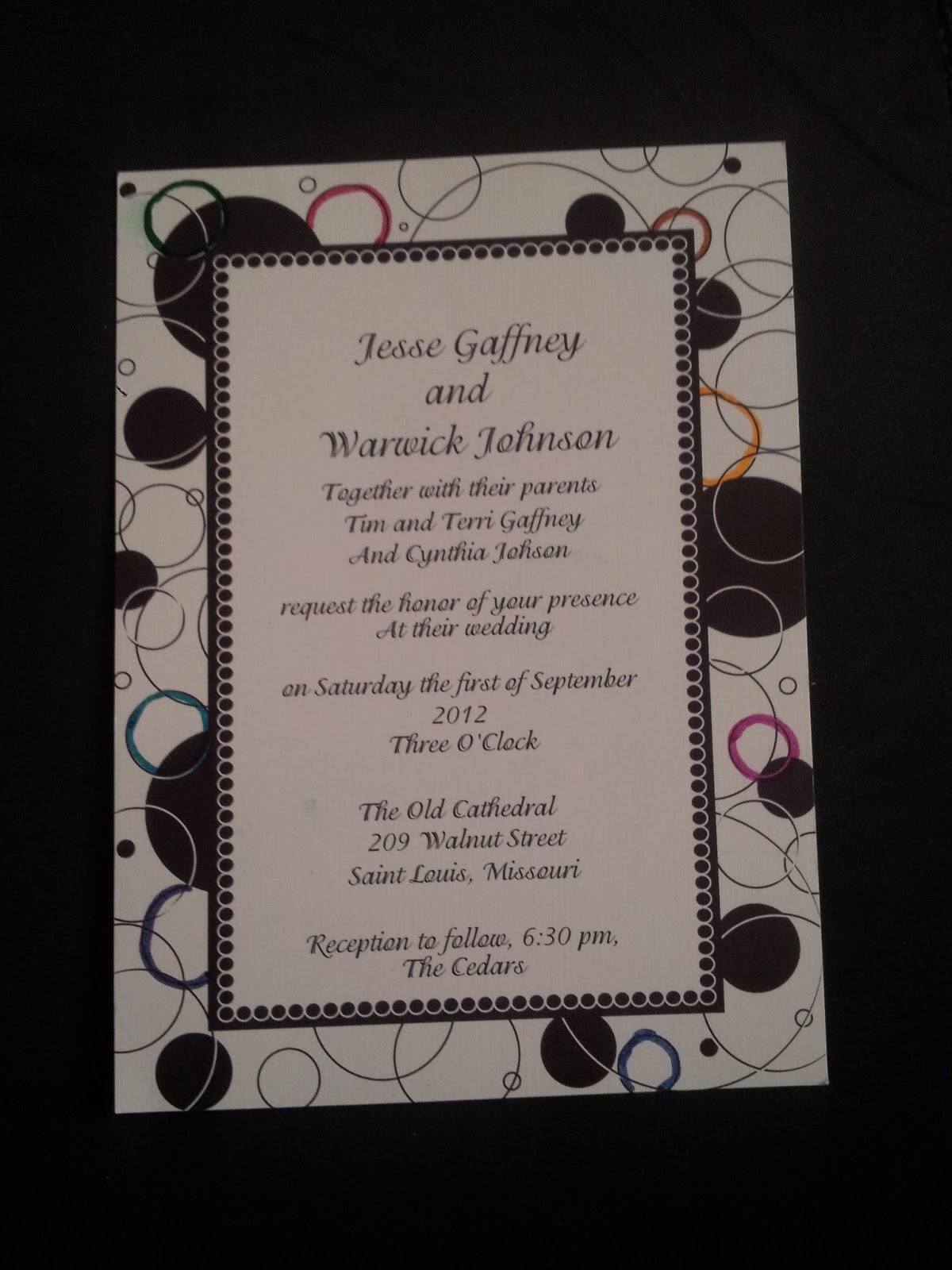
We ended up finding some very cute black and white invites from  www.123print.com, Our wedding was starting to develop a bit of a black and white polka dot theme and these fit right in (and cost less than $1 each). As well as they fit with our wedding, they didn't seem very beautiful or special. I had a plan to add pops of color to the invites to echo the pops of jewel tone color we were planning to have in the wedding decorations. 
I got out my pack of crayola "Bold" markers and started experimenting (we had about 20 extra invites to play with).
I tried filling in some of the larger cirlcles
Using my hole punch to punch out circles, 
tracing hollow circles
filling in tiny circles, 
partially tracing circles, 
adding a colored border around the text, 
And tracing the large circles, 
Eventually we decided that we liked the filling in of small circles and tracing of large ones, we combines them and then I spent a very long time duplicating the design over all 200 invites. 
I was proud of the result, for some time and the price of a pack of markers I was able to get a great effect for very little money. The only thing I regret in retrospect is that I didn't invite friends over to help. The whole project would have been more pleasant and gone exponentially faster (it took me about 6 hours) if I had a bit of help. 

*note: 123print.com had amazing customer service and reprinted our invites at no charge when I realized there was a typo and I had listed the wrong time on the invite.

Tuesday, November 20, 2012

Plastic Champagne Flutes

In Hamlet at Notre Dame Shakespeare this past summer we needed a large number of champagne flutes for a party scene. I didn't have much money to spend on the prop, and had previously decided with the director that we would do our best to avoid putting any glass onstage in this show (there was so much stage combat that anything glass was guaranteed to break). We found a selection of plastic flutes that fit our look at Party City, quickly discovered that the cheap plastic was far too light. When the actors were holding the flutes in their hands we had no problems, but sitting on a table or on a waiter's tray it only took a slight breeze to send them all tumbling. 
To solve the problem of glassing falling (and then breaking), we needed to weight the bases of each glass. I had my assistant fill the small cavity at the bottom of each glass with silicone caulk. We pressed a large heavy washer into the caulk and then filled the base the rest of the way. We smoothed out the caulk so that the glass would sit flat on a surface and let it dry. 
You can see here that the inner layer of caulk stayed cloudy long after the outer layer had dried and become transparent. Fortunately this wasn't a problem for my purposes. 
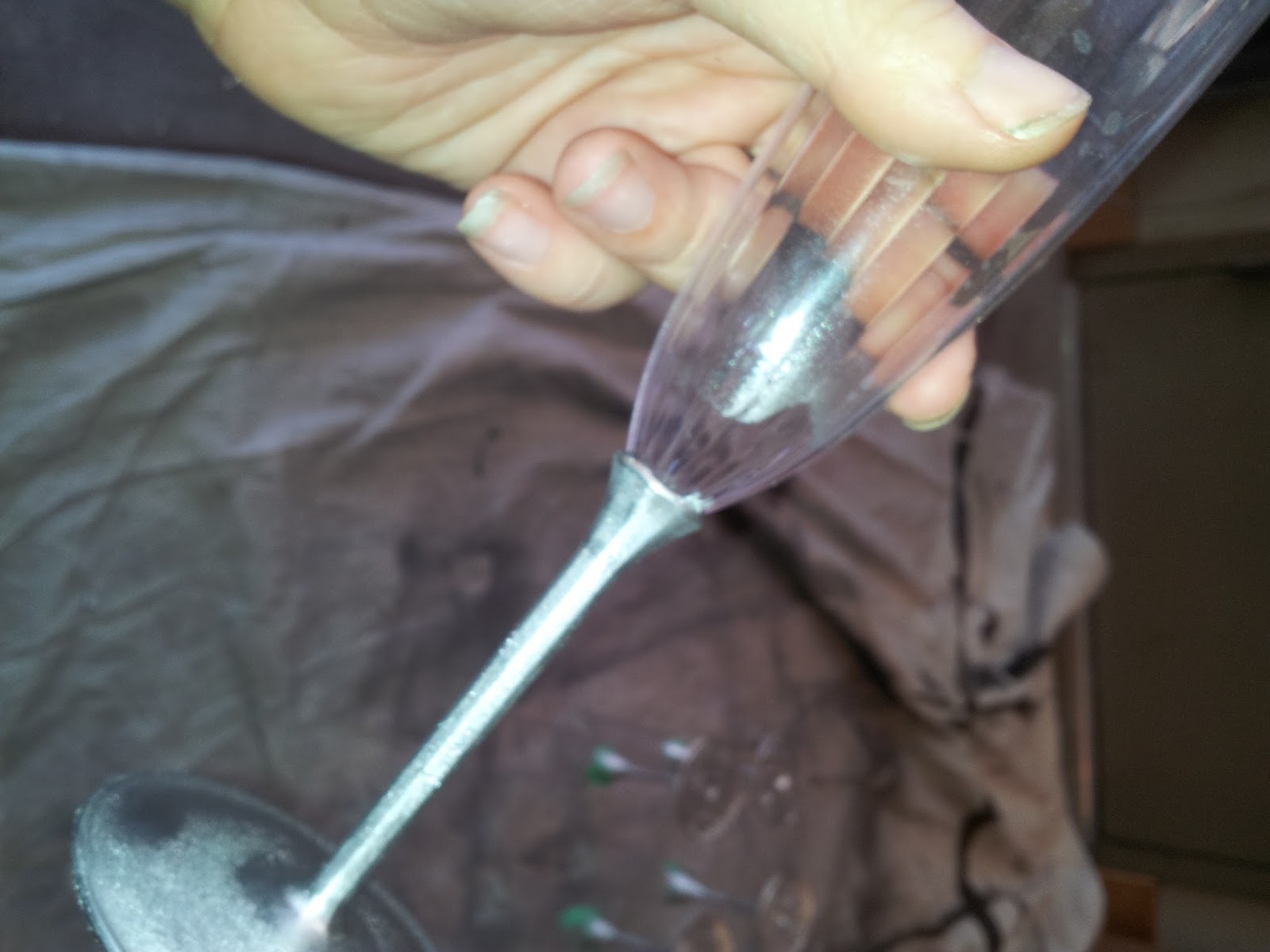
 We carefully taped over the bottom bit of the bell of the glass, and then spray painted the stem silver. 
 Then repeated several dozen times
 Once the tape was removed we had a set of silver stemmed champagne flutes that were safely plastic, light to carry on a large tray, nicely weighted to not tip over, and less than $1 each. 

Monday, November 5, 2012

A Simple Salad

Recently I needed to throw together a quick salad as a prop in a show. I had been under the impression that the salad was consumed every night, so I was planning on purchasing a basic bag salad every couple of shows for them to use. Turns out, no one ever even removed the saran wrap during the scene. 
Hooray for saving a ton of money not having to buy new salad every week!
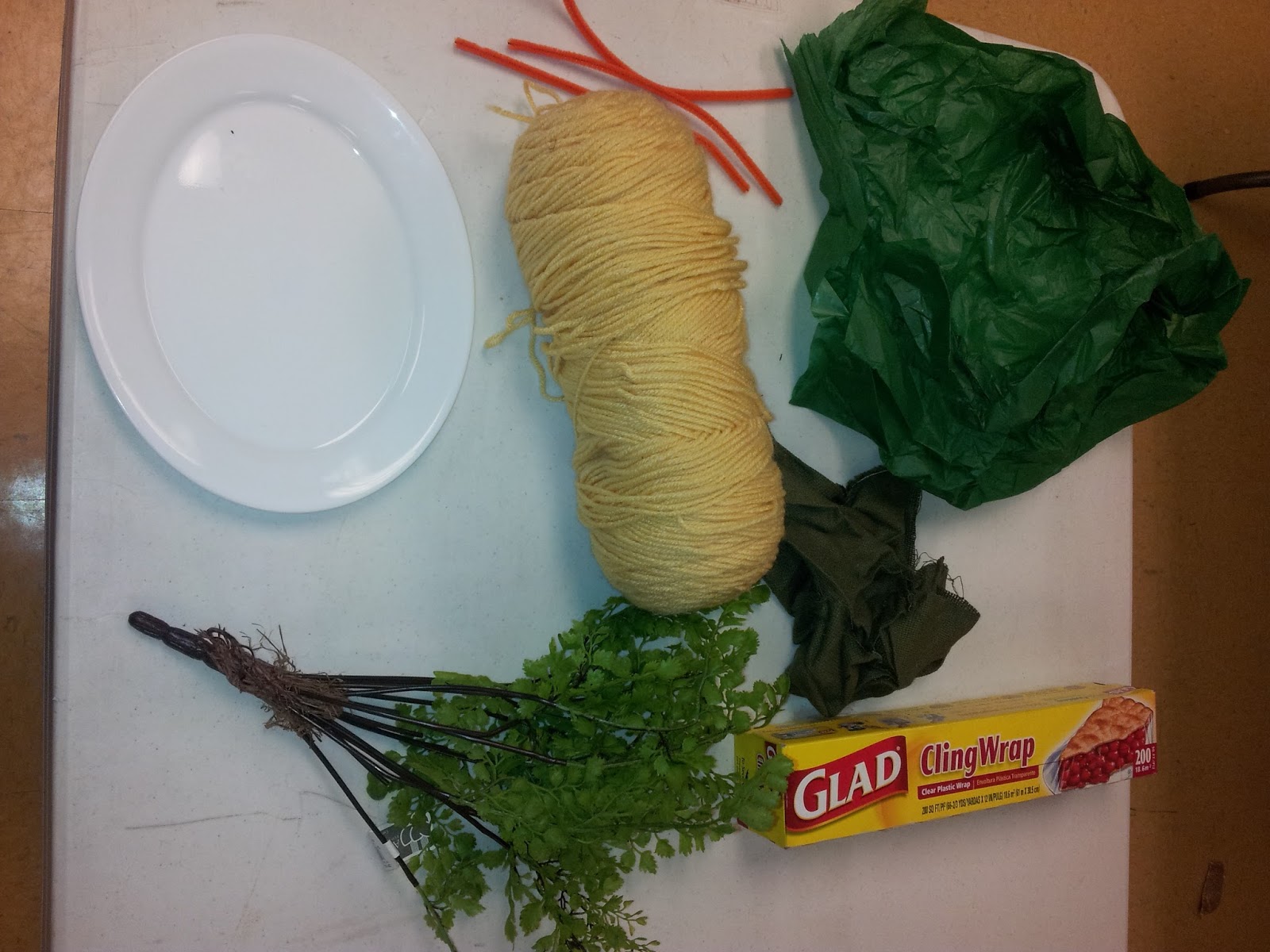
 Even better, I was able to make the fake salad entirely from supplies I had in my closet of supplies at home.
 I started by ripping and crumbling the green issue paper to serve as a base.
Next I cut up my scrap of green fabric to add some variety to the color and texture.
 Next I cut up my scrap of leftover plastic greenery to add more even more texture, and to add something that wouldn't swish so easily.
 Finally I added yarn for cheese and orange pipe cleaners for carrots.
 I wrapped it all in some saran wrap, and sent it onstage.
Hooray for free last minute props :)


Tuesday, March 20, 2012

The Rule of Three

The rule of three is this, you cannot have something fast, cheap, and high quality. In most cases you will have to pick two of the three, and in some cases, only one.

To provide some examples of how this works, lets talk about this couch.
Option 1- Sacrifice Fast
If you decided that you were absolutely inflexible on quality and budget, this couch could be attained by searching and waiting for something similar to show up on craigslist or at a thrift store for a good price and then reupholstering and generally rehabbing it until it looked like you wanted. For this to happen, you would have to allow a significant length of time to complete the task. It could take weeks or months for a couch that was close enough to what you wanted to show up at a price you can afford. In order to allow this option to work, the best thing a director, designer or theatre company can do for me is to start meetings early. Meetings don't have to happen often, but if you can tell me 5-6 months out that you know you are going to want a large wooden canopy bed, it is much more likely I will be able to find it, than if you tell me 6 weeks out.

Option 2- Sacrifice Cheap
If time is not an option, and you are still inflexible on quality, this couch could be attained by doing a wide and extensive search (remember man hours=money because you have to pay workers). Once the piece was found you would be stuck paying whatever the seller or renter wanted to charge. Even if you don't have a large budget, this can sometimes mean that you set a certain prop as a priority and commit to spending what you need to achieve it, including being willing to sacrifice perfection in other places. For example you may decide that the perfect period stage sword is a priority and be willing to spend what you need to get it, then to make the budget work, be willing to use the table and dishes that were already in stock from another show even if they aren't absolutely perfect.

Option 3- Sacrifice High Quality
If you did not have very much time, and also have a limited budget, then it is time to sacrifice quality. This does not have to mean that you will end up with a trashy or cheap looking show, but it does mean flexibility. It means that you have to forget about the perfect couch, and start expanding your mindset so that when one of these couches shows up, you are ready to jump on a deal. 
     
Sacrificing quality, at least in my world does not mean it will look bad, it just means flexibility, willingness to compromise and realistic expectations. It means that I might have had to borrow or rent the prop we are using so we can't change it or hurt it. It might mean that I can make the puppet's mouth or his arm move, but not both. It might mean that instead of buying something new, we find a way to alter something already in stock

As I have said before (quoting a friend, Sarah Miecielica) "theatre is art, on a schedule and with a budget." We would all like to have more money, more time, and more resources, but that is not the business that we are in. It is immensely helpful for the entire production team to come in with realistic expectations and, together, to develop a sense of which design elements are priorities and which are less important. That is not to say that miracles can't happen. I have experienced more than my share of theatre magic. Sometimes things that you need show up in alleys, sometimes a kind store owner or stranger lets you rent or borrow or buy something for far less than its actual value, sometimes a random friend comes out of the wood work to reveal that "oh, my dad has one of those in his garage he's being trying to get rid of," but those magical moments should be appreciated as the lucky gifts that they are. Plan-A should never be luck.  It is always best to know, as early as possible in the process, what we will do if nothing lucky comes our way, and if we end up having to pay current market price for everything we need.

Thursday, March 15, 2012

Becoming a Wedding Assistant

Ever since I started planning my wedding, I've been thinking about how lucky I am to already have all of these organization, shopping, budgeting, planning and crafting skills. More recently, after reading about a woman in New York who offers "craft concierge" services along side her wedding planning, and after talking to two Chicago stage managers who have translated their skills into wedding coordination, I started to think maybe I could make a business out of this. Then, when my fiance told me "this is what you should be doing" after a day working on wedding stuff, without me ever having mentioned the idea to him, I decided that I should go for it.
So here it is on my blog, an official announcement that over the next year or so I am going to be launching a wedding and event assistant business.

Some of the ideas I have about what I want my business to be (in illogical free writing, brainstorming order):
  • I am not a wedding planner, I am calling myself a wedding assistant, because this is not my wedding. It is the wedding of the two people getting married and I am there to help them.
  • There was a comment recently, on one of the blogs I read, from a bride who had the idea that she would do her own bouquets, from flowers she would buy at a grocery store or wholesaler. Unfortunately she had an aunt who was sure it would be a disaster, told her that it would be too difficult and that she would regret it. The bride was convinced and hired a professional florist, now she was wishing she had stuck to her guns. It dawned on me that I would be the perfect person to bridge that gap for people. I am not a professional florist, and will not charge you florist rates, but I have done DIY wedding flowers before, I know what I'm doing, we'll do them together. Having that extra set of experienced hands could give you the confidence to shoot down the nay-sayers and stick to your guns (and not just on flowers, that goes for DJing your wedding with an I-Pod, writing your own ceremony, making your own dress or veil or jewelry, baking the cake, or any number of other projects).
  •  One of my life philosophies, that I think I could bring into the wedding world well is, "You can have anything you want, you just can't have everything you want." Everyone is going to have something special that they want to splurge on for their wedding, whether it is the cake, the food, the dress, the band, the venue or any other number of things. My mission will be to find you enough savings in other places through some creative sourcing and DIY craft projects, that you will be able to afford that one special thing. 
  • I'm an awesome mediator (I'm pretty sure that comes out of growing up the middle girl between two brothers). I am a rock star when it comes to dealing with difficult family and friends and finding compromises. I am great at helping people see one another's side of a problem, and I will be great at heading off any and all possible disasters on a wedding day or leading up to it.
  • Included in my prop designer skills, I am a carpenter and can build special tables, card boxes, alters, centerpieces etc. 
  • I can sew. Not enough to create your wedding dress, but certainly enough to repair last minute rips and tears, make a veil, help you create custom table linens or any number of other projects you might dream up. 
  • I know all the antique and thrift stores in the Chicago area and I visit them regularly. If you're looking for something (vintage jewelry, vases for centerpieces, mismatched china for the place settings etc) I can be on the lookout for you, buying what you need for reimbursement later. 
  • I am great at making spreadsheets, lists, budgets and such, and will be excited to help you make yours. 
  • In addition to all of this, what I could offer to brides would be a listening ear, a brainstorming partner, a voice of reason and calm, someone who will never get tired of hearing about your wedding, and someone who will more than likely show up with ice cream on a really stressful day, because ice cream always helps. 
What I need now is a bit of confidence and some references, so that I can convince people I don't know to hire me. If you know of anyone who might be interested in some wedding or event help (from small projects up to entire events), pass along my information. Right now I would be offering my services at VERY reduced rates in an attempt to build a bit of a portfolio. 

Hopefully, with a lot of hard work and a little luck, I'll have to start another blog soon. This time with wedding projects.

Wednesday, February 23, 2011

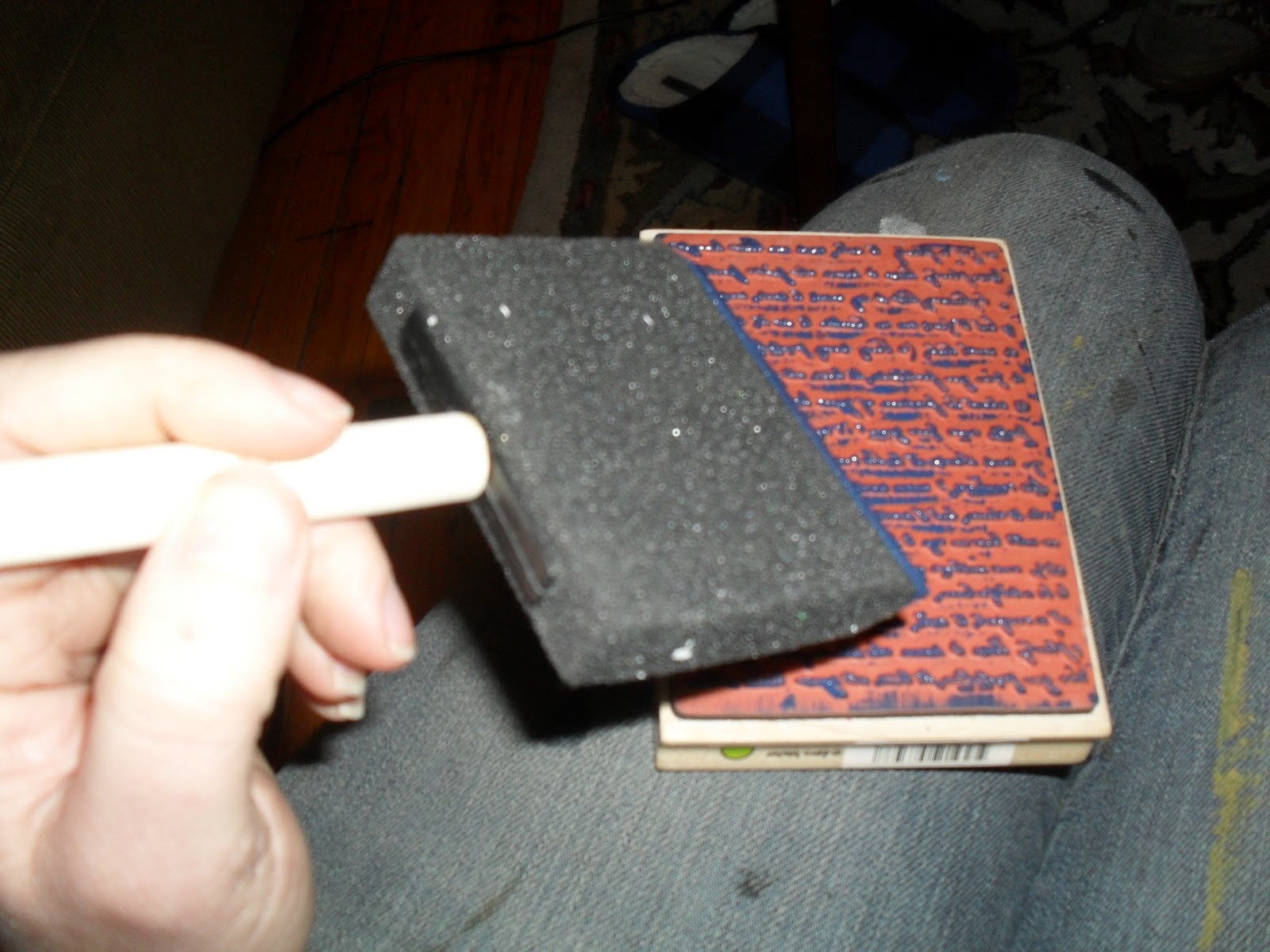
Book filling stamp

If you have never used one, I have to recommend that you purchase one or more of these stamps. 
brush on some paint (or ink from a stamp pad)
and press down into the book.
We wanted to leave the book blank in places so that the actors could write in it during rehearsals and fill pages with drawings, but it's a big book to fill.
A couple of stamps every few pages went a long way toward helping the book look full.
The process was also helped by my heat gun. I was able to stamp, dry and turn the page quickly and easily.

This project was for a show my fiance is working on, but I'm glad that I got a chance to use the stamp. I have a project coming up in the summer that is going to need a messy journal, I am thinking I might buy a second one (the craft stores sell multiple varieties) to get some length and width variety to the passages.