This lesson/rule comes from Sarah Hughey, a friend and fantastic lighting designer who I have worked with on numerous productions.
The rule is simple; When you are working on a show, especially during tech, you will likely have a long list of notes you would like to complete. On that list, you will have notes that you took yourself for things that you would like to work on/improve, and notes from the director, actors, and maybe other designers and collaborators. When it comes time to start crossing the notes off your list, always take care of notes given to you by others before the notes you took on your own.
The reason for the rule should be obvious. If a director or other designer sees the same problem several nights in a row, after a note has been given, it begins to make you look bad. People can get a bad impression regardless of how many other notes have been completed. You want to be the person who completes notes quickly and efficiently, and who never has to be asked twice.
As obvious as the rule seems when typed out, I was terrible at this before Sarah explicitly explained it as one of her personal rules. It can be very easy, especially when the notes others give you are small or simple, to push them to the bottom of the list in favor of larger or more complex notes that will take more focus.
Now, I have begun to employ the rule (sometimes needing to say it out loud to remind myself). I take care of the notes from others first, especially if they are simple. And when I am unable to complete the notes from others by the next rehearsal, I make a point to let them know how progress stands on that specific task, and when they should expect to see it completed (often this involves waiting on shipping, or waiting for the weekend until a store is open on Monday).
Showing posts with label collaboration. Show all posts
Showing posts with label collaboration. Show all posts
Monday, September 9, 2013


Thursday, August 15, 2013
High School Tech Portfolios
While looking for another email, I recently stumbled across a conversation I had with a friend who is a high school drama teacher. He had two students who were looking to present tech portfolios for colleges and wanted to know if I had any tips. After re-reading the conversation, I decided that it might be worth sharing more widely.
Some of this I learned by creating my own portfolio during college, some of it I learned while working in the theatre recruitment office as a work study position. Please feel free to pass this along to any high school tech student you know, and please feel free to comment below or email me directly if you have any questions.
Adam: hey - do you have any quick and dirty tips for a portfolio presentation for college?
me: what kind?
lighting?
set?Stage management?
Adam: Lizzie wants to SM, Zoe wants to do Lights
2:20 PM those are the only tech folks this go around
me: They want to see progress as much as finished product
2:21 PM so if you have research images, sketches etc, include as many as you can with the pictures from the production.
For Lizzie (SM), she should divide her paperwork into two books
2:22 PM one is a rehearsal book that contains blocking notes and anything else she used in rehearsal
the other is a show binder that contains the script neatly marked for calling the show
2:23 PM The show binder should be so neatly and cleanly marked that any other stage manager could pick it up and call the show without having to ask any questions.
The more samples of clean, easy to understand paperwork Lizzie can provide (that she created) the better. Contact sheets, schedules, rehearsal reports for example.
2:25 PM For both of them, it is more what you have to say about what is in the portfolio than what is physically included, so practice talking about it.
What were your challenges on this show and how did you overcome them?
What did you learn from working in this way?Remember, all high schools do not work in the same way. You should not assume that if you tell a college rep that you were the lighting designer, or the SM or the props master that they know what that means. You need to tell them what that meant at your high school. What exactly were your responsibilities in that position.
2:26 PM Also from a asthetic standpoint...the pages should be easy to look at, not too cluttered (this is mostly for designers) 3-5 images per page depending on the size of the pages.
2:27 PM No cutesy creative fonts, just clear and easy to read.The photos should be straight on the page with a simple clean border around each photo (no overlapping photos or tipped artsy angles). Resist the temptation to turn this into a scrap book.
2:28 PM Make sure you can easily read the name of the show, author, director and perhaps the names of the costume and set designers (whose work will also be pictured in the lighting design photos)
keep your shows on either two or four pages, never one or three
2:29 PM In other words, I want to open to a page and have everything I see belong to the same show.
2:37 PM Also, shows do not need to be in chronological order
2:38 PM take your three most impressive pieces and put #1 first, #2 in the middle of your portfolio and #3 at the end. Fill in with your other shows in between.
2:39 PM Those top three don't need to be the ones with the prettiest pictures, they may just be the things that are most unique, that set you apart
2:40 PM Anything that might be different than what the college reps have been looking at all day.
Adam: does Lizzie (SM) want to include any pictures in her portfolio?
2:50 PM me: If she does, not many
2:51 PM They can give her something to talk about "getting all the cast organized for these vignettes and in and out and up and down the ladders and the stairs was one of my big challenges and this is how I did it"
2:52 PM "As you can see by the costumes, I had a lot of work coordinating X with the designer and the wardrobe crew"
Her pictures should be limited, a small portfolio of pictures (could be binder sized) to go with her beautiful books of paperwork
Adam: Should Zoe include old lighting plots that were created on Word before she knew what she was doing?
me: yes she should, put them later in the book.
2:54 PM They will be interesting to the college reps because they show a desire to learn and, when shown with the better, later ones, an ability to self teach and improvise when she doesn't have all the skills yet. When she shows them she should present them in that light
"this is where I was three years ago, I knew what I needed before I had been taught how specifically to do it, and this is the way I found to get things done"Remember that you are in high school and the colleges don't need you to know everything coming in. They want someone who is excited to learn and able to be taught. They want someone who is passionate about theatre, driven, ambitious, and willing to work hard. They want someone who is collaborative, and cooperative, responsible and respectful. Emphasis those qualities, regardless of the quality of the photos you are able to show, and you will have success.
Tuesday, July 30, 2013
Forte Piano
One of my biggest worries going into our production of Amadeus, was the forte piano. You simply can't do the show without it, it's the focal point of several scenes and needed to be beautiful.
Our costume designer proposed a brilliant solution. As it turned out, one of the local universities was planning to do Amadeus this coming school year. She put me in touch with the set designer there and we decided to share the work. The University paid for the materials (about $200), and gave me their shop space to work in for the day. They also sent me a student assistant for a few hours to help. I did the research, shopping and building, and the set designer at the university did the painting.


The piano was built with a plywood base and lid. 1x12 framing, and bendy-board for the curved side. There is a 1 inch plywood curve, cut to match the curve of the base of the piano on the top edge of the bendy board which helps it hold it's shape.

To create the keyboard I used a single piece of 1x12 and ran it through the radial arm saw at 3/4 inch increments. Each cut only went about half way across the width of the board, leaving everything attached on one edge. This allowed me to only worry about attaching one piece, and allowed me to keep even spacing along the keyboard.

The black keys were cut from a piece of 1x which had been ripped on the table saw to the correct width I needed. The ends were curved down by briefly running them past the belt sander.

The legs of the piano were Oak railing pieces purchased at Menards and cut to length. They are attached with long lag screws going from the inside of the piano (attach these before the keyboard) down almost 5 inches into the leg.

I used an extra leg, hinged to the inside of the piano to hold the lid open when needed.


And here is the finished piano onstage, finished and painted.

I was very proud of how it turned out.
Friday, March 15, 2013
To All The Small Theatre Companies
I had a wonderful meeting with a woman the other morning. She is planning to produce her first storefront show here in Chicago, with the hopes of continuing to produce with the same group as a new theatre company. We talked a bit about resources here in Chicago, the way tech tends to be scheduled, things that are typically written into designer contracts, and payment schedules.
She also asked me a very interesting question- What makes me want to work with a company that can't pay me what I'm worth? What can a small company offer to me as an artist, besides money, to make me want to work with them.
I gave her a long list, and I figured, why not share it with anyone else who could use it.
In no particular order:
She also asked me a very interesting question- What makes me want to work with a company that can't pay me what I'm worth? What can a small company offer to me as an artist, besides money, to make me want to work with them.
I gave her a long list, and I figured, why not share it with anyone else who could use it.
In no particular order:
- Be up front with me from the first email. "We don't have a lot of money" is what I usually hear, which is honest, but if I don't know exact dollar amounts, it is impossible to have a productive conversation. This is partially because I need to look at my personal budget and see if I can afford to do this show, but more because I need to know if it is possible to do the show, at the level of quality I hold myself to, for the amount in the budget.
- On a similar point, it is really helpful to have a conversation with the director about what is possible and what is not possible for me to do on this show with this budget. If the director and I start out on the same page, the budget can be any size, but if the director has aspirations bigger than her budget, it doesn't matter what size the budget is, we will both end up unhappy with the end product.
- Treat the things I provide you with respect. I will not get frustrated if something breaks, especially in rehearsal when you are trying new ideas, that is part of the process. I will get frustrated if pieces are lost, or not stored safely, or if I give you specific instructions for the use or care of something and those instructions are ignored.
- Get me involved in the production process as soon as possible. I love working on shows where production meetings start months before the first rehearsal, even if we only have one or two. I love to be in a room full of artists talking about the meaning of the play, what we would like to communicate to the audience, what sort of language we all want to work with in terms of color, and shape and texture that could apply to all design elements? I love conversations about why we are doing this show in this time and this place, who our audience is, how we want them to interact with the characters etc. Productions that start this way always seem to lead to more collaborative production teams, which helps produce work that we can all take pride in.
- Continue that type of artistic collaboration throughout. I distinctly remember sitting in a production meeting after a first preview; the lighting designer mentioned that he had been distracted during the performance by the squeaking stool in the stage manager's booth behind him, he figured that she may not have been aware that the sound was carrying. The ASM indignantly turned to the room and asked "Did the lighting designer just give stage management a note?" The room went silent, and after that no designer felt very comfortable giving a suggestion or even asking a question to another department, and an atmosphere like that can only hurt a show. An open conversation between all departments about what is working and what isn't from sound cues to script choices allows everyone in the room to take advantage of the collective knowledge of so many theatre practitioners Collaborative environments with open conversations make me feel like I am growing as an artist, and that makes me want to come back to work with you.
- Feed me. I know it's little and I know it's silly, but something to eat that I don't have to think about goes a long way to making tech more pleasant and making me feel appreciated. Also if I am running around like that, I often forget to eat, and I get pretty cranky before I realize I'm probably just hungry, this is not a time when I am doing my best work.
- Do something about parking if possible. If you can make an arrangement with a local lot, or reimburse me for some of my meter receipts, or even have an ASM ready to run out and grab something from me when I pull up so that I don't have to circle for an hour to find a space close enough that I can carry all the everything from my car, that would be awesome. While many theatres in town are easily accessible by public transportation, that doesn't help me when I have a car full of props (costume designers have this issue too, help them out if you can).
- I worked with a theatre that did a talkback with each person involved after each show. I met two company members (who had not been directly involved in this production) for coffee and talked for an hour about what went well, what didn't, what I would do differently if I could do it again, and then about what my career goals and aspirations were in general. It was awesome. It made me feel appreciated, respected, and I got some great feedback and career advice.
- Get me keys to the space, if you can (if you are renting I know this is much less doable). If I can drop off big pieces at any time of day regardless of who else is around and available it makes my job so much easier. It is hard to keep shopping for furniture if there is a dining table taking up the entire bed of my pickup truck.
- Pay attention from the beginning to where the trouble spots are going to be. One of my favorite theatre companies does this particularly well. Time, labor, and budget resources are directed to the department who will need them most. I know if I am doing a big props show with them I will have a bigger budget, a bigger fee, a few more one-on-one meetings with the director and/or the set designer and I'll have the production manager offering to help me track down big pieces. I see the same support being thrown behind other designers when it is a heavy costume or lights show. If I know I will be taken care of when I need help, I will keep coming back regardless of whether the support was directed to my department this time.
- Do interesting shows with a clear mission. The more targeted you are about what you do and what makes you different from everyone else, the more intriguing you are. The more passionate you are about WHY you choose to do what you do, the more likely I will becoming interested and involved in your mission and invested in your success. The rule of thumb I tell people is, that I should be able to give you ten amazing plays that you would love to see, and you should be able to eliminate seven of them immediately because they aren't a good fit for your company. If you can't do that, you need a more focused vision.
- Prop Freeze! This is my favorite new thing. The idea is that we set a date during the rehearsal process when the director is supposed to stop adding new props (with a couple of companies this has been first tech). After the freeze date the director can still ask for new things and for changes, and I will do them to the best of my ability, but I also have the ability to tell them without any guilt that there is no longer enough time or money to make that change. With some directors, this would hardly ever come up, but with others, it's really good to know I have a safety net in case they make a last minute outlandish request.
- Get me help. I have lots of ways I can use untrained labor. There is always a repetitive project that could use another set of hands, and I love to teach. Even one or two hours on one day can be awesome and make me feel supported.
- Understand that I will likely leave when I'm done. Especially on smaller shows, if I have completed all of my notes and haven't been getting notes from other people, I'm probably going to stop coming to previews and I may not make it to opening. This is not because I don't like the show or hanging out with you, this is probably because I need to start working on my next show. If you are understanding and respectful of this, I am much more likely to want to work with you again.
- Remember, I need to keep working with these vendors. A few years ago, I performed a props miracle and was able to get a high-end furniture store to loan me several expensive modern furniture pieces for a production. At the time I was driving a small car, but the company manager assured me that they had someone with a pickup who would help to return the pieces to the store after strike. I learned about a year later that they never returned the pieces. I could never bring myself to show my face in that store again (it recently closed).
- Hire cool people. A lot of this will be contingent on doing some of these other things so that the cool people want to keep coming back. Nothing will make me sign on for a low paying show quicker than a list of people involved that I like working with.
Sunday, February 10, 2013
Working with Actors
In the four shows that I have done with a certain theatre company, I have always found myself having trouble with the actors. They don't seem to know how to handle their props, they don't speak to technicians with any respect, and there are more than the usual number of divas.
On the most recent production with this company I found what I believe to be the source of this problem.
We were looking for a space for a crossover for the actors backstage. There was plenty of space behind the large cyc, but none of it was ideal. We were using large cyc lights to back-light the drop; if the actors passed in front of the lights they would cast shadows, but if they passed behind they had to deal with a large number of cables as trip hazards. After seeing some spare sheets of masonite/hardboard backstage, I suggested that we lay the sheets end to end behind the lights, Gaff tape them together and gaff tape them to the floor, to create a bridge over all of the cables.
"No," The production manager responded, "what if the actors kicked the lights while passing behind them."
I stared at the 4'-0" wide pathway I was proposing and was confused, it seemed plenty wide enough to me, " We could lay down a white tape line on the front 1'-0" of the masonite and tell the actors to stay behind the line," I offered, "that would keep the actors well away from the lights."
"No," I was told again, "actors are stupid, they will find a way to break things." The assistant stage manager, stage manager, and production manager were all in agreement.
I was shocked, but suddenly I understood why I had all of the problems that I did with the actors at this company; they didn't behave intelligently or respectfully because they were not treated with respect and were assumed to be unintelligent. They didn't know how to handle their props, because the stage manager assumed they were stupid, and didn't bother to explain things to them. I discovered later that day that while I had taken the stage manager aside to carefully explain all the changes that had been made going into first tech, she had never bothered to pass any of that information on to the actors who were using the props.
So for the record, and for all those theatre artists who may be holding ignorant opinions, actors are not stupid. I have encountered this type of attitude among high-schoolers sometimes, and once in a while with a frustrated college student, but I was shocked to discover this attitude among seasoned professionals. I would have thought that someone who held this type of opinions would have gone onto an alternate career pretty quickly.
I will say it again, actors are NOT stupid. Actors have a lot to focus on during a performance. They need to be thinking about their next scene, their next costume change, their choreography and their lines. Props, costumes, sets and special effects need to be straightforward, and predictable. They need to work the same way every time. If there might be complications, or if the piece might fail in some way, they need to be informed, and they need to be told what they should do if the piece does fail. Actors are not stupid, but with the dozens of things they need to be remembering at any given moment, in addition to our expectation that they be tuned into their emotions and making the character come to life, they can sometimes have trouble focusing on the complexities of a technical element that needs to be incorporated.
"Don't get too close to the lights" might be a bit subjective and vague, they might need to know more about how the lights are wired and bolted down in order to understand how close is too close. "Stay behind the white line" is more clear; it can be quickly, visually processed and allow the actor to move on to focusing on the performance.
Actors are not stupid, but they do need clear communication and instruction. If you can't explain what you need them to do with a prop, costume, or special effect in three easy steps, it's too complicated. The actors will never know as much about props as a props master, or as much about clothing as a costumer, and they should not be expected to, that is your job. Calling actors stupid because you are having difficulty creating an effect that works simply and consistently is an easy excuse. Push yourself to find new solutions or to more effectively troubleshoot the ones you have. Remember a piece might be easy for you to operate, not because it is easy, but because in creating it, you became intimately familiar with it's construction.
And if you are still convinced actors are stupid, at the very least keep your opinion to yourself. You never know when you are making a bad impression on someone like me.
And if you are still convinced actors are stupid, at the very least keep your opinion to yourself. You never know when you are making a bad impression on someone like me.
Saturday, January 5, 2013
Fruit basket
In The Black Nativity, one of the numbers takes place in a market scene. I have baskets full of fruit, vegetables, bread, fish, and fabric. The baskets need to looks full and plentiful, have loose pieces for the actors to exchange during the scene, but be solid enough that things aren't rolling away during the dance.

Saturday, November 10, 2012
A level playing field
I had a meeting this summer with a reader of this blog who was interested in talking to me about going into tech theatre as a profession.
During our discussion she spoke of her nervousness in taking on one of her first large jobs on a show. She was worried that her inexperience would be obvious, and that she wouldn't know how to solve some of the challenging problems that the show's design was calling for.
I was able to give her some ideas about how the effects the director was imagining could be accomplished based on a similar effect I had previously needed in another show. The thing is, knowing how to solve her problem was mostly luck. The similar project I had done was on one show three years prior. I hadn't used anything like that effect before or since. If I hadn't been able to do that production, or a different director or designer had worked on that production with me, I would have had no idea of how to answer this student's question.
Experience in this line of work isn't nearly so linear as it is in other professions. I may have been in the business for years longer than someone else on the production team, and another person may have done three times the number of shows that I have, but in the first production meeting, we're on a bit of an even playing field because no one on the team has ever done THIS show before. It's not that experience doesn't matter, the more shows that I work on, the more likely it is that on the next show I will come across challenges I've worked with before. As I have worked on more productions in the city, it has become more and more likely that when I need something, I know of a theatre who has it in stock, or a vendor who might be able to sell it to me. There is, however, no guarantee. There will still be something on most shows that is new and challenging. It can be frustrating to never be able to truly master this profession, but it can also be incredibly freeing. Because every show is new, I am able to ask for help without embarrassment. It is totally okay for me to walk into a production meeting and say, I've never encountered quite this challenge before, does anyone have any ideas? And more often than not, someone does. Through the collective experience of everyone in the room, there is usually at least one person who can say "I did a production once where we did something similar, and here's how we did it."
Becoming a better theatre professional has something to do with building up a large arsenal of tips and tricks, sources and knowledge. Some of this can be acquired through research, reading and seeing other theatrical productions, but some can only be acquired through time and experience. The other key ingredient to success in this business has very little to do with experience, and everything to do with collaboration, being unashamed to ask for help, being able to articulate your needs and being willing to listen and understand the ideas of others.
During our discussion she spoke of her nervousness in taking on one of her first large jobs on a show. She was worried that her inexperience would be obvious, and that she wouldn't know how to solve some of the challenging problems that the show's design was calling for.
I was able to give her some ideas about how the effects the director was imagining could be accomplished based on a similar effect I had previously needed in another show. The thing is, knowing how to solve her problem was mostly luck. The similar project I had done was on one show three years prior. I hadn't used anything like that effect before or since. If I hadn't been able to do that production, or a different director or designer had worked on that production with me, I would have had no idea of how to answer this student's question.
Experience in this line of work isn't nearly so linear as it is in other professions. I may have been in the business for years longer than someone else on the production team, and another person may have done three times the number of shows that I have, but in the first production meeting, we're on a bit of an even playing field because no one on the team has ever done THIS show before. It's not that experience doesn't matter, the more shows that I work on, the more likely it is that on the next show I will come across challenges I've worked with before. As I have worked on more productions in the city, it has become more and more likely that when I need something, I know of a theatre who has it in stock, or a vendor who might be able to sell it to me. There is, however, no guarantee. There will still be something on most shows that is new and challenging. It can be frustrating to never be able to truly master this profession, but it can also be incredibly freeing. Because every show is new, I am able to ask for help without embarrassment. It is totally okay for me to walk into a production meeting and say, I've never encountered quite this challenge before, does anyone have any ideas? And more often than not, someone does. Through the collective experience of everyone in the room, there is usually at least one person who can say "I did a production once where we did something similar, and here's how we did it."
Becoming a better theatre professional has something to do with building up a large arsenal of tips and tricks, sources and knowledge. Some of this can be acquired through research, reading and seeing other theatrical productions, but some can only be acquired through time and experience. The other key ingredient to success in this business has very little to do with experience, and everything to do with collaboration, being unashamed to ask for help, being able to articulate your needs and being willing to listen and understand the ideas of others.
Sunday, July 15, 2012
Lessons I Forget I Know
Right now I am working on a production of Hamlet at Notre Dame's Summer Shakespeare Festival. I have an amazing assistant who is very eager to learn, and in working with her, and explaining my work to her, I've remembered some tips and tricks that I use on a regular basis and sometimes forget I know.


First, when antique and thrift shopping I take pictures, lots of them. It is obvious to take pictures of the things I think might be useful,

but I also take a picture of the price tag on the item,

and, when I need to establish the scale of an item, I also take a picture that includes my purse. I use the purse because it is a neutral item that I am guaranteed to have with me in a production meeting when we are discussing options.

Another trick I have learned to use is to label pictures and options that I send to directors and designers. It could be just numbers or letters, but it helps clarify email and phone conversations when you can't be in the same room with the rest of the team members.
This trick was actually reinforced when I neglected to use it recently. I sent a document of photos to the director and designer. There were six pictures on each page, two images of furniture piece. The director replied to the email that he loved the second table on the page, we had a few more exchanges about the size of the piece he had chosen and how it might function, and I made plans to purchase the piece when I returned to Chicago the next day.
Because there had been a lot of back and forth about several pieces, many of which would be serving multiple purposes in the show, I sent one final document with photos of all the pieces I planned to purchase with captions indicating which scenes we would be using them for. It was only upon receiving that final email that the director and I realized we had been speaking of different pieces. He did not realize that the first two photos on the page were of the same desk. His note said he liked the second table on the page, but he was actually referring to the second photo of the first table. We were able to clarify the discussion and I was able to purchase the correct piece of furniture.
The experience served as a reminder to me that there are reasons I take the time and energy to do a little bit extra. When I make an assumption that everyone is on the same page, I run the risk of making a very expensive mistake (I would have paid $250 for an non-returnable desk had I not realized the confusion).
Monday, June 4, 2012
Props Designer vs Props Master
I've been recently working on a very big, very high budget show. The set designer on this project is kind of a big deal, he has Broadway credits and TV credits and movie credits and has been working at the top end of the industry for over 30 years.
I recently had a very interesting discussion with him about the titles of props master vs props designer. Over the last few years working in Chicago I have started more and more to call myself a props designer, so I was a little taken aback when John (the set designer) told me that he found the term incredibly annoying and insulting. He feels that calling the props person a designer as well takes away from the credit he should be receiving, or in some way demeans his position as set designer. I understand his point, and while I don't completely disagree with him, I think that the situation always needs to be taken into account.
So to clarify, in my opinion there is a difference between being a props master and a props designer. When I am a props master, I expect to be working very closely with the set designer. I expect to be given research and input on what the furniture, set dressing and key props should look like. The set designer is someone who will look at photos of the 6 desks I have located, and make the final choice of which one to buy. If I am the props master, then I have a collaborative partner who will be taking more responsibility for the final look of the show (whether that credit is receiving positive praise or accepting negative criticism). I will, of course, be making many decisions about details, budget, and small hand props on my own (or else why bother hiring me), but the overall look of the production is mine to support, not to decide.
I call myself a props designer so often in Chicago, because in so many of the small storefront theatres where I work, I am not the same level of support from set designers. In so many cases, furniture, set decoration and the overall look and feel of the props are left completely to me to discuss and work through with the director. I usually make an attempt first to achieve collaboration with the set designer, sending photos and emails, and asking for research; it is only when I do not get the information I need that I start to make decisions without input from the set designer. I am perfectly happy to assume full responsibility for the final look of the show in those cases (at many theatres this has nothing to do with the quality of the designer, it is just the way labor has traditionally been divided), but with that responsibility should come the credit and title of designer.
My conversation with John helped me to clarify and articulate to myself these differences. When the conversation initially started (and for a few days after), I worried that I was being self-important and pretentious by calling myself a props designer. I worried that I should stop using the term for fear of annoying potentially important people. With a lot of thought I have come to the conclusion that the term has it's place. I need to be more careful about how I use it, and after articulating for myself where the line is between master and designer, need to apply the terms appropriately, but abandoning the term completely would be just as wrong as using it in all cases.
I recently had a very interesting discussion with him about the titles of props master vs props designer. Over the last few years working in Chicago I have started more and more to call myself a props designer, so I was a little taken aback when John (the set designer) told me that he found the term incredibly annoying and insulting. He feels that calling the props person a designer as well takes away from the credit he should be receiving, or in some way demeans his position as set designer. I understand his point, and while I don't completely disagree with him, I think that the situation always needs to be taken into account.
So to clarify, in my opinion there is a difference between being a props master and a props designer. When I am a props master, I expect to be working very closely with the set designer. I expect to be given research and input on what the furniture, set dressing and key props should look like. The set designer is someone who will look at photos of the 6 desks I have located, and make the final choice of which one to buy. If I am the props master, then I have a collaborative partner who will be taking more responsibility for the final look of the show (whether that credit is receiving positive praise or accepting negative criticism). I will, of course, be making many decisions about details, budget, and small hand props on my own (or else why bother hiring me), but the overall look of the production is mine to support, not to decide.
I call myself a props designer so often in Chicago, because in so many of the small storefront theatres where I work, I am not the same level of support from set designers. In so many cases, furniture, set decoration and the overall look and feel of the props are left completely to me to discuss and work through with the director. I usually make an attempt first to achieve collaboration with the set designer, sending photos and emails, and asking for research; it is only when I do not get the information I need that I start to make decisions without input from the set designer. I am perfectly happy to assume full responsibility for the final look of the show in those cases (at many theatres this has nothing to do with the quality of the designer, it is just the way labor has traditionally been divided), but with that responsibility should come the credit and title of designer.
My conversation with John helped me to clarify and articulate to myself these differences. When the conversation initially started (and for a few days after), I worried that I was being self-important and pretentious by calling myself a props designer. I worried that I should stop using the term for fear of annoying potentially important people. With a lot of thought I have come to the conclusion that the term has it's place. I need to be more careful about how I use it, and after articulating for myself where the line is between master and designer, need to apply the terms appropriately, but abandoning the term completely would be just as wrong as using it in all cases.
Tuesday, March 20, 2012
The Rule of Three
The rule of three is this, you cannot have something fast, cheap, and high quality. In most cases you will have to pick two of the three, and in some cases, only one.
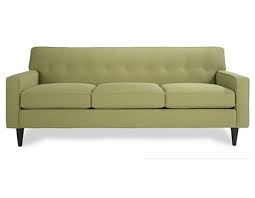
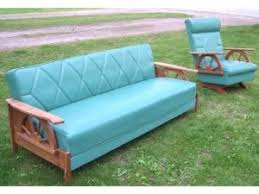
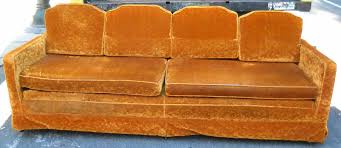
To provide some examples of how this works, lets talk about this couch.




As I have said before (quoting a friend, Sarah Miecielica) "theatre is art, on a schedule and with a budget." We would all like to have more money, more time, and more resources, but that is not the business that we are in. It is immensely helpful for the entire production team to come in with realistic expectations and, together, to develop a sense of which design elements are priorities and which are less important. That is not to say that miracles can't happen. I have experienced more than my share of theatre magic. Sometimes things that you need show up in alleys, sometimes a kind store owner or stranger lets you rent or borrow or buy something for far less than its actual value, sometimes a random friend comes out of the wood work to reveal that "oh, my dad has one of those in his garage he's being trying to get rid of," but those magical moments should be appreciated as the lucky gifts that they are. Plan-A should never be luck. It is always best to know, as early as possible in the process, what we will do if nothing lucky comes our way, and if we end up having to pay current market price for everything we need.
To provide some examples of how this works, lets talk about this couch.
Option 1- Sacrifice Fast
If you decided that you were absolutely inflexible on quality and budget, this couch could be attained by searching and waiting for something similar to show up on craigslist or at a thrift store for a good price and then reupholstering and generally rehabbing it until it looked like you wanted. For this to happen, you would have to allow a significant length of time to complete the task. It could take weeks or months for a couch that was close enough to what you wanted to show up at a price you can afford. In order to allow this option to work, the best thing a director, designer or theatre company can do for me is to start meetings early. Meetings don't have to happen often, but if you can tell me 5-6 months out that you know you are going to want a large wooden canopy bed, it is much more likely I will be able to find it, than if you tell me 6 weeks out.
Option 2- Sacrifice Cheap
If time is not an option, and you are still inflexible on quality, this couch could be attained by doing a wide and extensive search (remember man hours=money because you have to pay workers). Once the piece was found you would be stuck paying whatever the seller or renter wanted to charge. Even if you don't have a large budget, this can sometimes mean that you set a certain prop as a priority and commit to spending what you need to achieve it, including being willing to sacrifice perfection in other places. For example you may decide that the perfect period stage sword is a priority and be willing to spend what you need to get it, then to make the budget work, be willing to use the table and dishes that were already in stock from another show even if they aren't absolutely perfect.
Option 3- Sacrifice High Quality
If you did not have very much time, and also have a limited budget, then it is time to sacrifice quality. This does not have to mean that you will end up with a trashy or cheap looking show, but it does mean flexibility. It means that you have to forget about the perfect couch, and start expanding your mindset so that when one of these couches shows up, you are ready to jump on a deal.
Sacrificing quality, at least in my world does not mean it will look bad, it just means flexibility, willingness to compromise and realistic expectations. It means that I might have had to borrow or rent the prop we are using so we can't change it or hurt it. It might mean that I can make the puppet's mouth or his arm move, but not both. It might mean that instead of buying something new, we find a way to alter something already in stock
As I have said before (quoting a friend, Sarah Miecielica) "theatre is art, on a schedule and with a budget." We would all like to have more money, more time, and more resources, but that is not the business that we are in. It is immensely helpful for the entire production team to come in with realistic expectations and, together, to develop a sense of which design elements are priorities and which are less important. That is not to say that miracles can't happen. I have experienced more than my share of theatre magic. Sometimes things that you need show up in alleys, sometimes a kind store owner or stranger lets you rent or borrow or buy something for far less than its actual value, sometimes a random friend comes out of the wood work to reveal that "oh, my dad has one of those in his garage he's being trying to get rid of," but those magical moments should be appreciated as the lucky gifts that they are. Plan-A should never be luck. It is always best to know, as early as possible in the process, what we will do if nothing lucky comes our way, and if we end up having to pay current market price for everything we need.
Saturday, March 10, 2012
A New National Theatre
A few months ago I was having a conversation with my friend Nolan about the state of theatre in this country. We got on the subject of the Federal Theatre Project (a program that was part of the New Deal, the initiative funded theatrical performances and arts development all over the country). What, we asked, would such a program look like today, and how could it work? As fair warning, when this conversation was fresh in our minds, I suggested Nolan help me write a blog post on the subject, and then we both got busy and then we forgot. So my apologies if things are a little disjointed now or if references are a little vague.
Theatre is an art that I have always believed needs to focus on the local. When you try to say something universal, you often fall into the trap of being so generic you don't say anything at all. On the flip side of that, being so local is leaving theatre out of the national conversation. We live in a world where distance is often becoming less and less of a challenge. I can go on twitter or facebook, countless blogs, email, skype or (if I'm old fashioned) my cell phone, and discuss ideas, music, movies, television, books and countless other topics, with people around the country and around the world. We can't however, talk about theatre, at least about a specific production.
At the Time of Nolan's and my conversation there was an article in Newsweek that included a list of challenging intellectual things happening "right now." One of those things was a production of Arcadia. I remember reading the article and thinking, "That's nice, but how many people who are reading this magazine will actually have access to that production."
Wouldn't it be great, Nolan and I discussed, if there were a national theatre? It wouldn't achieve the goals we have in mind if we used the model of the National Theatre in London; no matter where we placed the venue, it would be out of reach for the majority of the country. The model of the old Federal Theatre Project wouldn't work either. Funding random programs around the country is nice, but doesn't do much that the regional theatres don't already do, and sending around touring productions is nice, but doesn't facillitate a national conversation when it may be months and months between different regions seeing the show.
Our idea for a new national theatre would involve an initiative where the NEA (or another national organization) would choose a show and then offer it, royalty free, to theatres around the country, with the catch that the production must open around a uniform date. Ideally theatres all over the country would pick up the show, and allow audiences from hundreds of cities to join a conversation together about themes, ideas and different artistic takes on the same script. Each theatre company would naturally bring their own aesthetic and local spirit to their production but the single script would allow them to express local perspective as part of a larger national conversation.
Logistically, I believe this could be done incredibly cheaply, or even at no cost at all. Playwrights and publishers, I imagine, would be happy to participate with very little upfront compensation. The sale of scripts, and the national promotion of both the writer and the play, and likely appearance fees would provide enough compensation to make up for a small royalty.
As a side benefit, I imagine a project like this could also facilitate the communication, and collaboration of formerly separated theatres and arts organizations. Giving a theatre in DC a reason to start a discussion with a theatre in Seattle might foster further communication, collaboration and artistic innovation.
Theatre is an art that I have always believed needs to focus on the local. When you try to say something universal, you often fall into the trap of being so generic you don't say anything at all. On the flip side of that, being so local is leaving theatre out of the national conversation. We live in a world where distance is often becoming less and less of a challenge. I can go on twitter or facebook, countless blogs, email, skype or (if I'm old fashioned) my cell phone, and discuss ideas, music, movies, television, books and countless other topics, with people around the country and around the world. We can't however, talk about theatre, at least about a specific production.
At the Time of Nolan's and my conversation there was an article in Newsweek that included a list of challenging intellectual things happening "right now." One of those things was a production of Arcadia. I remember reading the article and thinking, "That's nice, but how many people who are reading this magazine will actually have access to that production."
Wouldn't it be great, Nolan and I discussed, if there were a national theatre? It wouldn't achieve the goals we have in mind if we used the model of the National Theatre in London; no matter where we placed the venue, it would be out of reach for the majority of the country. The model of the old Federal Theatre Project wouldn't work either. Funding random programs around the country is nice, but doesn't do much that the regional theatres don't already do, and sending around touring productions is nice, but doesn't facillitate a national conversation when it may be months and months between different regions seeing the show.
Our idea for a new national theatre would involve an initiative where the NEA (or another national organization) would choose a show and then offer it, royalty free, to theatres around the country, with the catch that the production must open around a uniform date. Ideally theatres all over the country would pick up the show, and allow audiences from hundreds of cities to join a conversation together about themes, ideas and different artistic takes on the same script. Each theatre company would naturally bring their own aesthetic and local spirit to their production but the single script would allow them to express local perspective as part of a larger national conversation.
Logistically, I believe this could be done incredibly cheaply, or even at no cost at all. Playwrights and publishers, I imagine, would be happy to participate with very little upfront compensation. The sale of scripts, and the national promotion of both the writer and the play, and likely appearance fees would provide enough compensation to make up for a small royalty.
As a side benefit, I imagine a project like this could also facilitate the communication, and collaboration of formerly separated theatres and arts organizations. Giving a theatre in DC a reason to start a discussion with a theatre in Seattle might foster further communication, collaboration and artistic innovation.
Sunday, October 30, 2011
...and then it gets cut...
Since I started working props, I have been told over and over again that props masters have a very high burnout rate, and there are days when I totally understand why.
 By far the worst things though, and the one that leads to the most frustration and burn-out, is cuts and changes. Unlike scenery, which can be difficult to change once it is built, props are pretty easy to change, so they will get changed. Often. They will also get cut. Often. Remember this beautiful rug that took Katy almost three full days of work to braid, coil and glue. They were worried about one of the rolling set pieces getting caught on it, so they decided it should be painted instead. The choice makes sense, and I agree.
Much of the job is based on luck, sometimes it's all in the timing (bones and brains around halloween= easy, the same bones and brains in June= frusterating, the same goes for other holiday decorations, outdoor toys, fake seasonal flowers and any other number of things you might never have realized stores only carry seasonally).
There is an unending number of skills you'll be asked to have; carpentry, sewing, upholstery, sculpting, painting, graphic design, puppetry, rigging and many others. It can get discouraging when you are expected to be a master of all these things, and are continually being confronting with another skill you need to learn.

This situation was sort of best scenario. Katy doesn't care too much as long as she gets paid, and I don't feel like my time was wasted. I am a little frustrated because I have plenty of other things I could have used Katy's help on, and would have been in a much better position going into tech if she hadn't spent her time on the rug, but overall I was able to pretty easily brush it all off and move on.
And to add an even happier ending, I pulled the artistic director backstage during previews, unrolled the rug and asked her if there was any way to use it. They are currently using it under all the little tables and chairs they have set up in the lobby with coloring books for the kids prior to the show, so at least someone is enjoying it (even if it is being quickly destroyed by being trampled by dozens of muddly little shoes each weekend).
And to add an even happier ending, I pulled the artistic director backstage during previews, unrolled the rug and asked her if there was any way to use it. They are currently using it under all the little tables and chairs they have set up in the lobby with coloring books for the kids prior to the show, so at least someone is enjoying it (even if it is being quickly destroyed by being trampled by dozens of muddly little shoes each weekend).
Tuesday, October 25, 2011
The value of ME
Recently, on apracticalwedding.com, a stationary designer, Julie from Up Up Creative conducted a one month "pay-what-you-can" experiment. She learned a lot about herself as an artist and business woman, and reading about her experiences and ideas helped me solidify many things that I've been struggling with as a freelance artist.
The core idea she hit on is, "What's valuable about my business is me."
Different people can pay me different amounts for the work I do (totally understandable, some theatre companies just don't have the funding that others have). The question is, how to scale the value I give to varying price points. As Julie pondered "If what's valuable about my business is me, how do I create a scale-able set of value propositions? Can I, and do I want to, provide varying amounts of me?"
In my work, I have sometimes found ways to provide varying amounts of me; projects that have fewer props, fewer unusual props, a more flexible time frame etc. I have started to realize though, that there is an amount that is too low; where what I can offer for the money a company has available to pay me, will result in a product that the company is not happy with and a I am not proud of. I can scale back the hours I spend working on a show. I can't scale back the quality of the work that I do. If the number of hours I have to spend on a project will require me to compromise quality in order to get it done, it's not a show I should be agreeing to take on.
Another element of the same idea, is that I am learning that I have better experiences with people who also see that value of me. I am learning that there is a huge difference between people who hire me because they want my experience and creativity and artistic input, and people who hire me because they have a big project that needs to get done and they don’t feel like doing it themselves. I’m also learning that the amount someone can pay does not correlate with the way I am going to be treated, and while I need the people who can pay a larger amount, I will make an effort to work with people on more limited budgets if I know I am going to be treated well and appreciated.
Wednesday, December 15, 2010
collaboration
First this post in incredibly overdue. This show took place in mid October...oh well better late than never.
So many times I have read on theatre blogs about education and collaboration. "We should be getting other parts of the school involved," high school teachers always seem to be saying. "We should take better advantage of our resources."
Recently I worked on a high school production that did exactly that. I had a great experience with the students and I would like to share it with you.
The production was of The Adding Machine by Elmer Rice. One of the main themes of the show is the interaction between men and technology, and the inability of the main character to cope with a world in which he becomes irrelevant, because his work can be done by a machine. Our director wanted to use projections, live video feed and other modern technologies to comment on this 1920's play.
I loved the idea and thought it was exactly the right direction to take the play, but also knew that the look we were hoping to achieve was WAY out of my league in terms of technical expertise. Fortunately the high school's AV club (called "tech team") was incredibly excited to get involved.

At the very first meeting as I described the concepts to both the theatre tech students and the tech team, the students were getting excited and suggesting new ideas that I hadn't even thought of ("during the Elysian fields scene could we project clouds and a blue sky on the acoustic tiles on the ceiling of the auditorium?" "Absolutely"). I told them what I wanted for each scene; they took the ideas and ran with them. We had live video feed onto projectors in two scenes, live video feed onto a tv screen in another scene, edited projections of both video and still images at all other times, and I hardly had to touch any it. A few of the students even moved from functioning as technicians to functioning as designers. They started to explore the meaning of the play and discuss how the projections contributed to the overall stage picture in each scene.
 Our actors and theatre students learned a lot about the technology they were working with (both physically and within the themes of the play) and the tech students got to explore (and I think found a new appreciation for) art and theatre.
Overall the experience was amazing, and all we had to do was ask, the faculty advisor for tech team did the rest and was grateful, I think, for the chance to do something totally different with his students.
So many times I have read on theatre blogs about education and collaboration. "We should be getting other parts of the school involved," high school teachers always seem to be saying. "We should take better advantage of our resources."
Recently I worked on a high school production that did exactly that. I had a great experience with the students and I would like to share it with you.
The production was of The Adding Machine by Elmer Rice. One of the main themes of the show is the interaction between men and technology, and the inability of the main character to cope with a world in which he becomes irrelevant, because his work can be done by a machine. Our director wanted to use projections, live video feed and other modern technologies to comment on this 1920's play.
I loved the idea and thought it was exactly the right direction to take the play, but also knew that the look we were hoping to achieve was WAY out of my league in terms of technical expertise. Fortunately the high school's AV club (called "tech team") was incredibly excited to get involved.

At the very first meeting as I described the concepts to both the theatre tech students and the tech team, the students were getting excited and suggesting new ideas that I hadn't even thought of ("during the Elysian fields scene could we project clouds and a blue sky on the acoustic tiles on the ceiling of the auditorium?" "Absolutely"). I told them what I wanted for each scene; they took the ideas and ran with them. We had live video feed onto projectors in two scenes, live video feed onto a tv screen in another scene, edited projections of both video and still images at all other times, and I hardly had to touch any it. A few of the students even moved from functioning as technicians to functioning as designers. They started to explore the meaning of the play and discuss how the projections contributed to the overall stage picture in each scene.

Overall the experience was amazing, and all we had to do was ask, the faculty advisor for tech team did the rest and was grateful, I think, for the chance to do something totally different with his students.
Thursday, December 2, 2010
Bottle Rockets
Sometimes the simplest tricks can be the most magical. Making these bottle rockets come to life was a brilliant collaboration between props, lights, sound and some very talented actors.

 The actor held the bottle rocket in the bottle and pretended to light it with the lighter.


We started with the bottle rockets (made of a cut up drinking straw and a thin dowel from Michaels wrapped with red duct tape)


When he let go, the bottle rocket dropped down into the bottle and disappeared. At the same moment there was a flash of light, the actors followed the invisible bottle rocket into the air and we heard the sound of a bottle rocket shooting.
The whole moment was incredibly effective and magical, and after all of my crazy brainstorming of a million high tech ways to accomplish the trick, turns out all I needed to do was think simple and trust my collaborators.
Subscribe to:
Comments (Atom)


 Posts
Posts

