I usually refrain from going into my personal life very much on this blog, but this will have to be an exception.
My younger brother Adam died last week at the age of 25. Please indulge me while I take some space and time to tell you about how he lived, the lives he touched and the people who loved him.
There are no lessons to take from the death of my brother. No health warnings to go on a crusade about (he probably should have stopped smoking and drinking so much beer, but neither of those things killed him), no drunk or distracted driver to get angry at, no causes to raise money or awareness for, no colored ribbon to wear (except the one for organ donation; which you should do some research on, and then sign up online). He had an unexplained ulcer in his colon that perforated, and then, three days after the surgery to fix his colon, unexplained internal bleeding. We've had plenty of family and friends send us to different websites about different disorders, with descriptions of similar things that have happened to other people, but we can't test any of these theories so I am not very interested in reading about them and raising any more what-ifs.
There is no reason that a happy, healthy, awesome 25 year old should die so suddenly, and I have no lessons to learn from his death, but, after seeing the overwhelming response of so many people at his wake (where we drank the bar out of beer), his visitation (where the line extended around the building of the funeral home and out the back door and lasted for 7 hours), and his funeral service (where the church was packed), I know there must be lessons to learn from the way he lived. So, in the spirit of celebrating his life, here is a list of awesome things about my brother Adam.
He was generous. He didn't have a lot of savings, but would never let me buy my own drinks when I came home for a visit, and was just as likely to buy a drink for a friend or coworker. When my nephew was born, he had the idea that he and I should open up a savings account for him so that Aunt Jesse and Uncle Adam could pay for college when the time came, and ever since he put me to shame. I would show up on Christmas with a check for $50 to make a deposit, and he'd have a $250 check. His apartment, his truck, his money and his time were all available to his friends at a moments notice if he could help them in any way.
He was independent. As much as he loved his friends, he had the confidence to go out to eat, or go to a bar, or even go out exploring an unfamiliar city on his own. As long as he had a book, and could find a cup of coffee or a beer, he was happy. Whenever we would go out together, I would discover that all the waitresses, and bartenders and diner regulars knew him, and liked him, and were delighted to meet Adam's sister and let me know what a cool guy he was. He didn't need the safety net of a friend to join him on his adventures. If he wanted to go somewhere, he went, with a confidence that he would find friends along the way, or if not, have an awesome time people-watching and reading his book.
Speaking of books, he was a reader in a way few people I know could match. When we were going through his apartment last week, I found multiple lists of books. If it was someone else I would assume the lists were "books I should read..." but with Adam, a list of 10-15 books could just as easily have been "books I read this month." He devoured fiction and non fiction, classic literature and newer best sellers. And as much as he loved reading, he loved sharing the books he loved. One Christmas he asked me for a copy of his favorite book (one I knew he already owned) because he had given away his copy to someone who needed to read it. A year later, he purchased another copy at a used book store we were in, because he had given away the other one too. He loved to own the books he loved, not to build a collection, but so that he could share that love with people he met.
Adam loved to debate, which drove me crazy at times, but was also awesome. Debates with Adam were great, because while he had very strong opinions, all the arguments were based in logic and facts and reason. Of course Adam wanted to win the debate, but he wanted to win it fairly, by having the best points, and the most information. He listened to the person he was talking to, took in their ideas and (most impressively) gladly acknowledged when they made a good point. He liked to be right, but I think he enjoyed debates most when they made him question and reevaluate his own beliefs. His opinions were flexible, always changing, growing and incorporating new information and experiences. More than anyone I know, he could have a long heated debate with someone who believed the exact opposite as he did, and maintain a sense of friendship and mutual respect the entire way through.
He was incredibly passionate. Either it was the greatest thing in the whole world ever, or he didn't care. he enthusiasm and excitement was contagious. He could go on for days about a delicious steak or seafood dinner. He would eagerly ask you to listen to his new favorite band. He would talk about the football draft for weeks before and after. He would call me in the middle of a baseball game to ask "did you see that catch?" It was hard to be around him, and not get excited about whatever he was excited about. He was not one to sit around and watch TV or play video games, or surf around online lazily. Adam wanted to be doing something, to be engaged, to be active, to be experiencing, and exploring and talking and sharing. If he was going to do something, it would not be mediocre or halfway. In no way did Adam drift through life; he experienced it, he took in the sites and sounds. He talked to the people, he enjoyed every bite of his food, he watched every play of the game, he never skimmed a page of a book. Playing softball, he never zoned out in the outfield; instead he stood every pitch in the ready position, waiting for the chance to make the play if the ball came his way.
Adam was a hard worker. Hard work is something that my parents taught us to value very highly and while we all took that lesson to heart, I think Adam lived it more than Brian or I ever could. His coworkers told us about how, when he would go out to the parking lot to take a cigarette break at work, he would always take a huge bag of trash out with him because he was heading to the dumpsters anyway. He would also keep the phone and his pad of paper with him, and often came in from break "break" with a few to-go orders to hand off to the kitchen. He didn't cut corners, and went above and beyond whenever he got the chance.
One of the most admirable things Adam ever did, was get through college. His first year of college he was taking classes with the aim of becoming a vet. Over the course of that year, he decided he didn't want to be a vet, he hated his classes, and he all but failed out. He took a year off from there to figure out what he wanted to do, took some classes at the local commuter school, came up with plans to move to Atlanta, or Phoenix, or Jamaica, to be a carpenter or a postman. As he was making all these plans he was also discovering his love of reading. One day he called me out of the blue to tell me he had decided to go back to college to get an English degree. He re-applied to Mizzou and was turned down. Instead of accepting that news he called the school to ask what he could do to change the "no" to a "yes" and was told that he would need to get special permission from the dean of the English department. "Okay," Adam answered, "how do I get a meeting with him." On the day of the meeting he work up bright and early, put on a suit, and drove to Columbia to convince the dean of the English department that they should look past his poor grades that first year at the school and give him a chance to prove himself now that he had discovered this passion for books. They agreed to give him the chance and he got to work. He took extra classes every semester and every summer, worked his way up to a good GPA (which was hard since his GPA included his grades from the classes he had failed his first year), and graduated only one semester behind his classmates who hadn't taken a year off.
I am so proud of the life that my brother lived, and wish I had taken more time to tell him while I had the chance. This, I suppose, is the next best thing. I don't have any lessons to offer you from his death. But I wanted as many people as possible to know how amazing he was while he was here. Debate with humor and goodwill, work hard, allow yourself to get excited about the things you love, read, give generously and never be afraid to be yourself.
Wednesday, April 4, 2012


Tuesday, March 20, 2012
The Rule of Three
The rule of three is this, you cannot have something fast, cheap, and high quality. In most cases you will have to pick two of the three, and in some cases, only one.
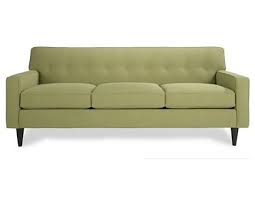
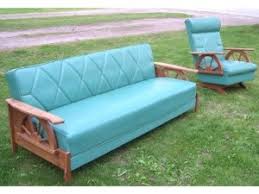
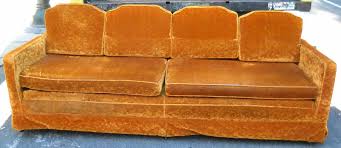
To provide some examples of how this works, lets talk about this couch.




As I have said before (quoting a friend, Sarah Miecielica) "theatre is art, on a schedule and with a budget." We would all like to have more money, more time, and more resources, but that is not the business that we are in. It is immensely helpful for the entire production team to come in with realistic expectations and, together, to develop a sense of which design elements are priorities and which are less important. That is not to say that miracles can't happen. I have experienced more than my share of theatre magic. Sometimes things that you need show up in alleys, sometimes a kind store owner or stranger lets you rent or borrow or buy something for far less than its actual value, sometimes a random friend comes out of the wood work to reveal that "oh, my dad has one of those in his garage he's being trying to get rid of," but those magical moments should be appreciated as the lucky gifts that they are. Plan-A should never be luck. It is always best to know, as early as possible in the process, what we will do if nothing lucky comes our way, and if we end up having to pay current market price for everything we need.
To provide some examples of how this works, lets talk about this couch.
Option 1- Sacrifice Fast
If you decided that you were absolutely inflexible on quality and budget, this couch could be attained by searching and waiting for something similar to show up on craigslist or at a thrift store for a good price and then reupholstering and generally rehabbing it until it looked like you wanted. For this to happen, you would have to allow a significant length of time to complete the task. It could take weeks or months for a couch that was close enough to what you wanted to show up at a price you can afford. In order to allow this option to work, the best thing a director, designer or theatre company can do for me is to start meetings early. Meetings don't have to happen often, but if you can tell me 5-6 months out that you know you are going to want a large wooden canopy bed, it is much more likely I will be able to find it, than if you tell me 6 weeks out.
Option 2- Sacrifice Cheap
If time is not an option, and you are still inflexible on quality, this couch could be attained by doing a wide and extensive search (remember man hours=money because you have to pay workers). Once the piece was found you would be stuck paying whatever the seller or renter wanted to charge. Even if you don't have a large budget, this can sometimes mean that you set a certain prop as a priority and commit to spending what you need to achieve it, including being willing to sacrifice perfection in other places. For example you may decide that the perfect period stage sword is a priority and be willing to spend what you need to get it, then to make the budget work, be willing to use the table and dishes that were already in stock from another show even if they aren't absolutely perfect.
Option 3- Sacrifice High Quality
If you did not have very much time, and also have a limited budget, then it is time to sacrifice quality. This does not have to mean that you will end up with a trashy or cheap looking show, but it does mean flexibility. It means that you have to forget about the perfect couch, and start expanding your mindset so that when one of these couches shows up, you are ready to jump on a deal.
Sacrificing quality, at least in my world does not mean it will look bad, it just means flexibility, willingness to compromise and realistic expectations. It means that I might have had to borrow or rent the prop we are using so we can't change it or hurt it. It might mean that I can make the puppet's mouth or his arm move, but not both. It might mean that instead of buying something new, we find a way to alter something already in stock
As I have said before (quoting a friend, Sarah Miecielica) "theatre is art, on a schedule and with a budget." We would all like to have more money, more time, and more resources, but that is not the business that we are in. It is immensely helpful for the entire production team to come in with realistic expectations and, together, to develop a sense of which design elements are priorities and which are less important. That is not to say that miracles can't happen. I have experienced more than my share of theatre magic. Sometimes things that you need show up in alleys, sometimes a kind store owner or stranger lets you rent or borrow or buy something for far less than its actual value, sometimes a random friend comes out of the wood work to reveal that "oh, my dad has one of those in his garage he's being trying to get rid of," but those magical moments should be appreciated as the lucky gifts that they are. Plan-A should never be luck. It is always best to know, as early as possible in the process, what we will do if nothing lucky comes our way, and if we end up having to pay current market price for everything we need.
Thursday, March 15, 2012
Becoming a Wedding Assistant
Ever since I started planning my wedding, I've been thinking about how lucky I am to already have all of these organization, shopping, budgeting, planning and crafting skills. More recently, after reading about a woman in New York who offers "craft concierge" services along side her wedding planning, and after talking to two Chicago stage managers who have translated their skills into wedding coordination, I started to think maybe I could make a business out of this. Then, when my fiance told me "this is what you should be doing" after a day working on wedding stuff, without me ever having mentioned the idea to him, I decided that I should go for it.
So here it is on my blog, an official announcement that over the next year or so I am going to be launching a wedding and event assistant business.
Some of the ideas I have about what I want my business to be (in illogical free writing, brainstorming order):
So here it is on my blog, an official announcement that over the next year or so I am going to be launching a wedding and event assistant business.
Some of the ideas I have about what I want my business to be (in illogical free writing, brainstorming order):
- I am not a wedding planner, I am calling myself a wedding assistant, because this is not my wedding. It is the wedding of the two people getting married and I am there to help them.
- There was a comment recently, on one of the blogs I read, from a bride who had the idea that she would do her own bouquets, from flowers she would buy at a grocery store or wholesaler. Unfortunately she had an aunt who was sure it would be a disaster, told her that it would be too difficult and that she would regret it. The bride was convinced and hired a professional florist, now she was wishing she had stuck to her guns. It dawned on me that I would be the perfect person to bridge that gap for people. I am not a professional florist, and will not charge you florist rates, but I have done DIY wedding flowers before, I know what I'm doing, we'll do them together. Having that extra set of experienced hands could give you the confidence to shoot down the nay-sayers and stick to your guns (and not just on flowers, that goes for DJing your wedding with an I-Pod, writing your own ceremony, making your own dress or veil or jewelry, baking the cake, or any number of other projects).
- One of my life philosophies, that I think I could bring into the wedding world well is, "You can have anything you want, you just can't have everything you want." Everyone is going to have something special that they want to splurge on for their wedding, whether it is the cake, the food, the dress, the band, the venue or any other number of things. My mission will be to find you enough savings in other places through some creative sourcing and DIY craft projects, that you will be able to afford that one special thing.
- I'm an awesome mediator (I'm pretty sure that comes out of growing up the middle girl between two brothers). I am a rock star when it comes to dealing with difficult family and friends and finding compromises. I am great at helping people see one another's side of a problem, and I will be great at heading off any and all possible disasters on a wedding day or leading up to it.
- Included in my prop designer skills, I am a carpenter and can build special tables, card boxes, alters, centerpieces etc.
- I can sew. Not enough to create your wedding dress, but certainly enough to repair last minute rips and tears, make a veil, help you create custom table linens or any number of other projects you might dream up.
- I know all the antique and thrift stores in the Chicago area and I visit them regularly. If you're looking for something (vintage jewelry, vases for centerpieces, mismatched china for the place settings etc) I can be on the lookout for you, buying what you need for reimbursement later.
- I am great at making spreadsheets, lists, budgets and such, and will be excited to help you make yours.
- In addition to all of this, what I could offer to brides would be a listening ear, a brainstorming partner, a voice of reason and calm, someone who will never get tired of hearing about your wedding, and someone who will more than likely show up with ice cream on a really stressful day, because ice cream always helps.
What I need now is a bit of confidence and some references, so that I can convince people I don't know to hire me. If you know of anyone who might be interested in some wedding or event help (from small projects up to entire events), pass along my information. Right now I would be offering my services at VERY reduced rates in an attempt to build a bit of a portfolio.
Hopefully, with a lot of hard work and a little luck, I'll have to start another blog soon. This time with wedding projects.
Saturday, March 10, 2012
A New National Theatre
A few months ago I was having a conversation with my friend Nolan about the state of theatre in this country. We got on the subject of the Federal Theatre Project (a program that was part of the New Deal, the initiative funded theatrical performances and arts development all over the country). What, we asked, would such a program look like today, and how could it work? As fair warning, when this conversation was fresh in our minds, I suggested Nolan help me write a blog post on the subject, and then we both got busy and then we forgot. So my apologies if things are a little disjointed now or if references are a little vague.
Theatre is an art that I have always believed needs to focus on the local. When you try to say something universal, you often fall into the trap of being so generic you don't say anything at all. On the flip side of that, being so local is leaving theatre out of the national conversation. We live in a world where distance is often becoming less and less of a challenge. I can go on twitter or facebook, countless blogs, email, skype or (if I'm old fashioned) my cell phone, and discuss ideas, music, movies, television, books and countless other topics, with people around the country and around the world. We can't however, talk about theatre, at least about a specific production.
At the Time of Nolan's and my conversation there was an article in Newsweek that included a list of challenging intellectual things happening "right now." One of those things was a production of Arcadia. I remember reading the article and thinking, "That's nice, but how many people who are reading this magazine will actually have access to that production."
Wouldn't it be great, Nolan and I discussed, if there were a national theatre? It wouldn't achieve the goals we have in mind if we used the model of the National Theatre in London; no matter where we placed the venue, it would be out of reach for the majority of the country. The model of the old Federal Theatre Project wouldn't work either. Funding random programs around the country is nice, but doesn't do much that the regional theatres don't already do, and sending around touring productions is nice, but doesn't facillitate a national conversation when it may be months and months between different regions seeing the show.
Our idea for a new national theatre would involve an initiative where the NEA (or another national organization) would choose a show and then offer it, royalty free, to theatres around the country, with the catch that the production must open around a uniform date. Ideally theatres all over the country would pick up the show, and allow audiences from hundreds of cities to join a conversation together about themes, ideas and different artistic takes on the same script. Each theatre company would naturally bring their own aesthetic and local spirit to their production but the single script would allow them to express local perspective as part of a larger national conversation.
Logistically, I believe this could be done incredibly cheaply, or even at no cost at all. Playwrights and publishers, I imagine, would be happy to participate with very little upfront compensation. The sale of scripts, and the national promotion of both the writer and the play, and likely appearance fees would provide enough compensation to make up for a small royalty.
As a side benefit, I imagine a project like this could also facilitate the communication, and collaboration of formerly separated theatres and arts organizations. Giving a theatre in DC a reason to start a discussion with a theatre in Seattle might foster further communication, collaboration and artistic innovation.
Monday, March 5, 2012
Making bodies ride the sled
A few weeks ago I posted about wrapping dummy bodies in sheets for Hunger at Lifeline Theatre. Once we tried to bring the bodies onstage we had a problem.

The characters are supposed to be dragging the dummies around on a toboggan, but there wasn't enough room backstage for the sled to sit flat on the floor before dragging it on. We had to be able to store the sled with the dummy vertically, and then lay them both down as the actor was entering. The dummy couldn't be strapped permanently to the sled, because the actors needed to dump the body onstage.

I used half a piece of PVC screwed to a small length of 1x4 to make a shallow hook.

I then used gaff tape to solidly tape the hook to the frame of the dummy.

Even once the dummy was wrapped in the sheet, the hook was easy to locate and use.

I added an extra piece of 1x4 to one of the slats on the sled to give my hook something to hold onto.

And here is an image of how the hook and the 1x4 fit together.

With the hook in place, the dummy could store vertically backstage until needed, and could be easily lowered and dragged out by one person.
Wednesday, February 29, 2012
Disappearing Dinner
The first scene in Hunger at Lifeline Theatre takes place at a fancy anniversary dinner. It is supposed to appear as if a lavish meal has just been completed. Unfortunately the entire setup needs to disappear in seconds. leaving only the desk beneath it, and only one actor is available to strike it. 

To accomplish this I started by cutting three pieces of lauan to match the size of the table top. I taped the lauan together along the seams creating hinges. Then, from the underside up, I screwed all of the flat dished to the lauan.

This first picture is of the table as it appears during the scene.

Then the scene ends, the actor striking the dinner moves all of the tall pieces (wine glasses and bottle, 2 stacked dessert dishes) to the center of the table, leaving only flat pieces on the sides.

From there, all the actor needs to do is lift up the two large side pieces and everything folds together to be neatly carried offstage.

Only one of the flat dishes ever holds any real food. I chose this small light dish for the "last bite of cake" that is consumed during the scene. So that this dish could be removed and washed by stage management , this plate is attached with Velcro instead of being screwed down.
Saturday, February 25, 2012
Russian painted tray
Sometimes the trickiest props are ones that no one else even notices. In Hunger at Lifeline Theatre, I was having trouble figuring out what to do about a small tray that was needed to carry a bowl of soup and a roll. Nothing I could find seemed right.


In any other situation I would probably have used a wooded tray to give the impression I wanted, but several scenes earlier we see the characters burning books in order to stay warm. I couldn't justify to myself that these scientists wold be burning books and would have left a wooden tray intact. All of the silver metal trays I found in stock though seems much too cold and formal.

I realized what the answer was when I stumbled across this old tray at an antique store. Of course, the tray should be a beautiful old Russian painted tray (also the show is set in Russia).

I couldn't afford to buy this tray (or any authentic Russian tray) on my budget, but I took this closer photo of the painting at the antique store and resolved to do it myself.

I started by painting a stock silver tray black. Then I used a small brush to add a base layer of color mimicking some of the strokes I saw in my research photo.

A second coat of paint in different colors gave my flowers a bit more dimension.

Then add some distance, and a bowl covering part of the plate and you have a very convincing fake antique. More importantly it fits into the mood of the scene without being visually or conceptually distracting.
No one else ever mentioned my tray (or even noticed it I think), but often that is the entire point.
Monday, February 20, 2012
large sugar crystal
Unfortunately for the blog, I didn't remember to take photos of the project until after it was over, but I will try to explain my process as well as I can with the images I have.

I started with a bar of wax I had leftover from other projects. I used a hammer and a screw driver to break off a variety of small chunks.
I attached the chunks together in a random pattern, melting each one a bit to hold it in place.
Once I had the shape and size I was looking for, I coated the entire things with a coat of melted wax dyed yellow, and then once the first layer was dry another coat that was more orange-brown.

After the wax was cooled, I began to carve away bits of wax with my matte knife. I needed to remove all the smooth and rounded corners and to remove the majority of the darker wax.

Once it was completed, the small cuts gave the crystal a much sharper look, made it appear to be composed of far more smaller crystals, and gave of a sparkly shine because it had so many smooth surfaces at a variety of angles reflecting light.

Subscribe to:
Posts (Atom)


 Posts


